Leucine
Your Complete Guide to Leucine
Leucine is an essential amino acid that triggers muscle protein synthesis by activating the mTOR pathway. It enhances muscle growth, prevents breakdown, and supports recovery by stimulating ribosomal activity and increasing muscle protein production. Found in high-protein foods and BCAA supplements, leucine is key for muscle repair and metabolism.

Leucine is an essential amino acid, meaning your body can't make it, so you need to get it from food.
It's a branched-chain amino acid (BCAA) and is known for its role in muscle protein synthesis, helping to build and repair muscle tissue.
Leucine can help improve body composition by stimulating muscle growth and preventing muscle breakdown, especially when combined with exercise.
Athletes may find leucine beneficial for boosting strength, supporting endurance, and speeding up recovery after intense physical activity.
You can find leucine in various animal-based foods like beef and chicken, and plant-based options such as nuts, seeds, and tofu.
This article is educational and not intended to diagnose, treat, or suggest any specific intervention, and should not replace qualified medical advice.

Whey Protein

Top Lactose-Free Protein Options for Sensitive Stomachs

Soy Protein

Rice Protein

Plant-Based Protein

Pea Protein
Leucine

Lactose-Free Protein

Is Milk Good for Muscle Growth

Is a Protein Shake a Good Breakfast
How to Get 100 Grams of Protein a Day

How Long Does Protein Powder Last

How Is Protein Powder Made

High-Protein Vegan Meals That Boost Muscle and Energy

High-Protein Chicken Recipes for Muscle Building

Gluten-Free Protein

Does Protein Keep You Awake

Cheap and Easy High-Protein Meals for Busy Days

Casein Protein

Can Protein Make You Poop More?

Best Vegetarian Protein Sources

10 Best Seafood Protein Sources to Add to Your Diet

10 Best High-Protein Vegetarian Foods for Every Meal

10 Best High-Protein Vegan Foods for Plant-Based Diets

10 Best High-Protein Meat Dishes for Muscle Growth

10 Best High-Protein Chicken Dishes You’ll Crave

10 Best Cheeses High in Protein for Healthy Diets

8 Healthy High-Protein Dinners You’ll Want Every Night

2-Minute Protein Mug Cake Recipe
Leucine: FACTS
Role | Key BCAA; stimulates muscle protein synthesis |
Form & Classification | Essential branched-chain amino acid |
Typical Dosage & Intake | 2–5 g around workouts |
Cycling | Not needed |
Sources | Meat, whey, BCAA supplements |
Safety & Interactions | Safe; excess may affect amino acid balance |
Dosage information is general and may vary with product brand, quality or individual needs; verify accuracy on package and consult a qualified practitioner before use.
What Does Leucine Do?
Leucine directly stimulates muscle protein synthesis by activating mTOR, the main pathway that regulates muscle growth.
Leucine is the most powerful amino acid for triggering muscle protein synthesis. It activates the mTOR pathway more strongly than other amino acids, making it central for growth. Even small doses can “switch on” the process, provided enough total protein is available. Without sufficient leucine, the body cannot effectively start new muscle building. This makes leucine one of the most studied nutrients for athletes.
It works as a signal, not just a building block, to start muscle construction.
Leucine intake around workouts maximizes the anabolic (growth-promoting) response.
It is often added to plant protein powders to improve their effectiveness.
Older adults especially benefit from leucine to overcome age-related muscle loss.
What Is Leucine?
Leucine is a branched-chain amino acid that directly triggers muscle protein synthesis through mTOR activation.
Leucine is an essential amino acid and a key trigger for muscle protein synthesis. It acts as a signal to the body that nutrients are available to build muscle. Among amino acids, it is most effective in stimulating the mTOR pathway, which regulates growth. Adequate leucine intake is important for athletes and those trying to preserve muscle mass during calorie restriction. It is commonly found in high-protein foods and added to supplements like BCAA powders.
Leucine is one of the three branched-chain amino acids, along with isoleucine and valine.
Its role as a signaling molecule makes it more impactful than other amino acids on muscle growth.
It is often supplemented by older adults to counter age-related muscle loss.
Research shows that a threshold amount of leucine is needed in each meal to maximize protein synthesis.
Which Type of Leucine Is Best?
Leucine in free-form powder is best because it is quickly absorbed and directly activates muscle protein synthesis.
Leucine is best taken in free-form or as part of high-quality protein powders that contain ample amounts of it. Free-form leucine is absorbed quickly and can directly stimulate muscle protein synthesis. However, when combined with other essential amino acids, it works even better. Protein powders with naturally high leucine, such as whey, are especially effective. The choice depends on whether the goal is targeted supplementation or overall protein intake.
Free-form leucine rapidly activates the muscle-building signal (mTOR).
Leucine-enriched blends maximize growth when other amino acids are also present.
Whey protein naturally has one of the highest leucine contents among proteins.
Standalone leucine can be used pre- or post-workout for a direct boost.
How to Add Leucine to Your Diet?
Leucine can be added by mixing powder into protein shakes or taking capsules alongside meals.
Leucine can be added to the diet through high-leucine foods like meat, dairy, and legumes, or through free-form supplements. Powdered leucine can be mixed into shakes or taken with meals. Many athletes prefer it around workouts to activate muscle protein synthesis. It is also commonly included in BCAA or EAA supplements. Ensuring enough total protein intake is necessary for leucine to work effectively.
Free-form leucine powders can be stirred into post-workout shakes for rapid action.
BCAA or EAA blends provide leucine along with supporting amino acids.
Foods like dairy and legumes naturally contribute leucine to the diet.
Taking leucine with meals improves its muscle-building effect.
What Are Key Ingredients of Leucine?
Leucine is a branched-chain amino acid that directly turns on the mTOR pathway for muscle growth.
Leucine is a branched-chain amino acid with a simple carbon structure that makes it highly effective for muscle signaling. It is the primary amino acid responsible for activating the mTOR pathway. Supplements provide pure leucine or blends with other amino acids. Natural protein sources also deliver leucine as part of their amino acid profile. Its effectiveness comes from being both a building block and a signaling molecule.
Leucine’s structure allows it to directly switch on muscle protein synthesis.
Free-form leucine supplements deliver high doses quickly.
BCAA blends combine leucine with isoleucine and valine for synergy.
Whole foods provide leucine alongside other essential nutrients.
Which Processes Does Leucine Affect?
Leucine affects mTOR activation, protein synthesis, and glucose uptake into muscle cells.
Leucine strongly affects the mTOR pathway, making it central to muscle protein synthesis. It initiates the anabolic switch even when other amino acids are present in smaller amounts. Leucine also impacts recovery by reducing muscle protein breakdown. It influences energy metabolism by acting as a fuel in some conditions. This makes it a signaling and structural amino acid at once.
Directly activates the mTOR process for muscle building.
Supports recovery by limiting breakdown processes after training.
Can be oxidized for energy during intense activity.
Acts as both a nutrient and a signal molecule in metabolism.
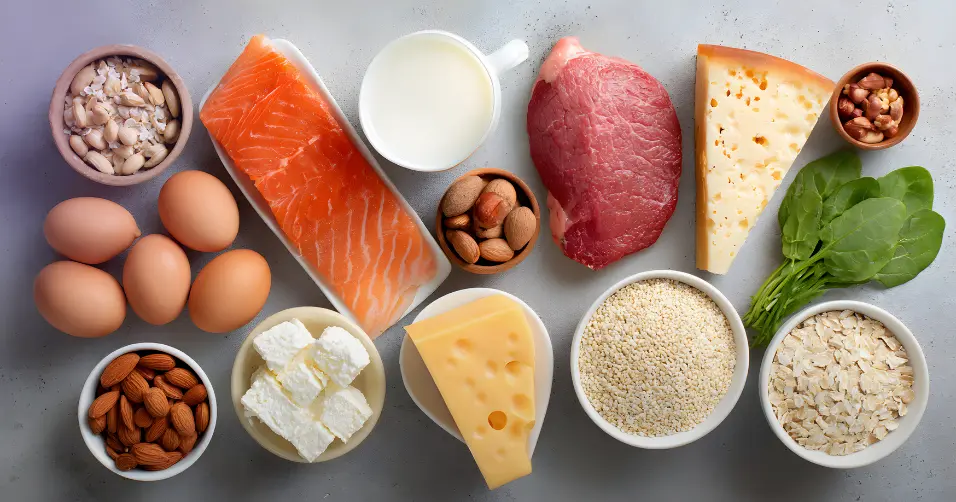
What Foods Have Leucine?
Leucine is naturally abundant in meat, fish, dairy, and legumes.
Leucine is naturally found in high amounts in animal proteins like meat, poultry, and fish. Dairy products such as milk, cheese, and yogurt also provide leucine. Plant-based sources include soy, beans, and peanuts. Whole grains like oats and corn contribute smaller amounts. These foods together supply the body with leucine for muscle support.
Meat and poultry are among the richest leucine sources.
Dairy products like milk and cheese provide steady leucine intake.
Soybeans and legumes contribute plant-based leucine.
Grains add leucine but at lower density compared to animal proteins.
Is Leucine Vegan?
Leucine is vegan when produced through fermentation of plants or microbes.
Leucine can be vegan if produced through plant fermentation, which is now common. However, some older supplements may use animal-derived sources. Vegans should look for products labeled as vegan or fermented leucine. Whole food sources like soy and beans also provide leucine naturally. With proper sourcing, leucine can fully support a vegan diet.
Fermented leucine from plants is widely available for vegans.
Animal-derived leucine may still exist in some older formulations.
Vegan-labeled leucine ensures plant-only sourcing.
Soy and legumes naturally contribute leucine to vegan diets.
Will Leucine Break a Fast?
Leucine will break a fast because even small amounts trigger protein synthesis and insulin response.
Leucine will break a fast because it is an amino acid that stimulates insulin release and muscle protein synthesis. Even though it is calorie-light, its signaling role ends fasting benefits. It interrupts processes like autophagy by activating growth pathways. Therefore, it should not be taken during a fasting window. It is best used after workouts or during meals.
Triggers insulin, ending the fasting state even in small doses.
Activates mTOR, halting fasting-related cell repair.
Very low calories, but still breaks fast due to signaling power.
Works best as part of post-fasting meals for muscle support.
Breaking a fast here is strictly physiological (e.g., insulin effects). When we say a supplement ‘does not break a fast,’ we mean it has negligible calories in normal use and is unlikely to disrupt fasting metabolism. Certain traditions or religious rules may treat any intake as breaking a fast—please follow your tradition and health needs.
What's the Best Leucine?
High-quality leucine should be fermented-sourced, with clear purity and no hidden blends.
Leucine quality depends on sourcing, purity, and form. Fermented leucine made from plant sources is considered high-quality and vegan-friendly. Products should contain pure leucine without unnecessary fillers. Fine powder forms allow better mixing and absorption. Verified third-party testing ensures the supplement contains only leucine as labeled.
Fermented leucine from plants ensures vegan and clean sourcing.
Pure formulations without fillers maximize effectiveness.
Powder form supports flexible dosing and rapid absorption.
Independent testing confirms purity and prevents contamination.
How Much Leucine Per Day To Build Muscle?
Leucine is effective at 2–3 g per serving, usually with meals or post-workout shakes.
Leucine is usually taken in 2–5 grams per serving, often around workouts. This amount is enough to activate the mTOR pathway and trigger protein synthesis. It should be paired with other amino acids or protein for best results. Timing pre- or post-exercise is common, though it can also be taken with meals. More is not better, as effectiveness levels off after the threshold is reached.
2–5g provides enough leucine to switch on muscle building.
Best timing is before or after exercise for anabolic effects.
Works best when combined with other amino acids or protein foods.
Higher doses above the threshold do not give extra benefits.
Dosage and timing information is generalized and may not be appropriate for all individuals; occasional inaccuracies may occur. Variations in supplement purity, formulation, or quality can also affect dosing relevance. Verify accuracy on package and consult a qualified practitioner before use.
What Are Common Mistakes When Taking Leucine?
A frequent mistake with leucine is taking it without other essential amino acids, which limits protein synthesis.
Leucine mistakes include taking it alone without other amino acids, overdosing, or poor timing. Leucine works best with other essential amino acids, not by itself. Taking too much (over 5g per serving) offers no extra benefits and may upset digestion. Some forget to take it around exercise, missing its anabolic window. Low-quality supplements may also have fillers instead of pure leucine.
Using leucine without other amino acids limits protein-building effects.
Over 5g per dose does not improve results and may upset digestion.
Missing the workout window reduces its anabolic efficiency.
Cheap powders with fillers reduce potency and purity.
When To Take Leucine?
Leucine is best taken with meals or after workouts to stimulate muscle repair.
The best time to take leucine is with or immediately after meals containing protein. This timing enhances muscle protein synthesis and recovery. It can also be used pre- or post-workout to boost amino acid availability. Pairing leucine with carbohydrates or protein increases absorption. Consistent intake throughout the day yields optimal growth effects.
Post-workout timing promotes rapid recovery and tissue repair.
Meal pairing triggers mTOR activation for stronger anabolic signaling.
Frequent doses keep muscle protein synthesis elevated across the day.
Combining with complete proteins prevents amino acid imbalances.
Dosage and timing information is generalized and may not be appropriate for all individuals; occasional inaccuracies may occur. Variations in supplement purity, formulation, or quality can also affect dosing relevance. Verify accuracy on package and consult a qualified practitioner before use.
How Fast Does Leucine Work?
Leucine stimulates protein synthesis within 30–60 minutes of ingestion.
Leucine acts quickly, with effects on protein synthesis beginning within 30–60 minutes after intake. This makes it effective when taken around workouts. Visible muscle growth takes weeks of consistent use and proper training. Recovery support can be felt within days through reduced soreness. Overall results depend on pairing leucine with total protein intake.
Activates muscle-building pathways within an hour.
Supports faster recovery in the first few days of use.
Muscle mass changes become visible after several weeks of training.
Works best when combined with other amino acids or proteins.
Results may vary between individuals, and no outcome is guaranteed. A tailored supplemntation plan is the best way to ensure the desired outcome.
Does Leucine Require a Cooldown?
Leucine can be taken consistently, though cycling may prevent over-reliance on single amino acids.
Leucine does not require a cooldown period because it is an amino acid present in regular foods. It can be taken consistently, provided total protein intake is adequate. However, very high supplementation without breaks is unnecessary. Since its effectiveness plateaus above a threshold, overuse does not improve results. Cycling is not needed, but moderation ensures balance.
Safe for continuous daily use without breaks.
Effectiveness depends more on total protein intake than cycling.
Excess intake above 5g per serving does not improve growth.
Cooldown is unnecessary unless digestive discomfort appears.
The need to pause or cycle depends on individual factors such as goals, tolerance, and clinical context. No universal rule applies, and specialist review is recommended before making adjustments.
Does Tolerance Develop for Leucine?
Leucine does not cause tolerance, though continual high use without other amino acids limits effectiveness.
Leucine does not cause tolerance since it is an amino acid found in everyday foods. The mTOR pathway responds consistently whenever leucine levels rise above the activation threshold. Taking excessive doses may not improve results but does not cause adaptation. Regular intake with protein-rich meals remains effective long term. No cycling is required to maintain benefits.
No tolerance develops, as leucine consistently activates protein synthesis.
Effectiveness depends on hitting the threshold, not cycling.
Excess intake offers no extra benefits but does not cause adaptation.
Daily intake with meals supports ongoing muscle health.
Information on tolerance is generalized and may not reflect individual differences in metabolism, duration of use, or health status. Reactions can vary, and any adjustment should follow qualified practicioner's recommendations.
Is Leucine Safe?
Leucine, an essential amino acid used for muscle growth, is likely safe in dietary amounts, but high-dose supplementation has not been studied long term.
Leucine is safe long term when consumed as part of normal dietary protein intake. As an isolated supplement, moderate doses show no harm in studies lasting months. Excessive intake may cause imbalance with other amino acids, which could reduce effectiveness. It plays a key role in muscle protein synthesis and is naturally present in many foods. Long-term safety is best when intake is balanced within overall protein needs.
Leucine is a natural amino acid, making it well tolerated over long periods.
Over-supplementation may interfere with the absorption of other branched-chain amino acids.
Most studies use doses for weeks to months, with no negative outcomes reported.
Long-term high-dose effects are not fully known, so moderate intake is advised.
Everyone’s biology and history are different. Unknown or underlying conditions can introduce unforeseen risks. Individualized professional advice is always recommended.
Can Leucine Be Stacked?
Leucine stacks well with whey protein or essential amino acids to maximize protein synthesis.
Leucine stacks well with whey or plant proteins to maximize protein synthesis. Adding HMB provides both anabolic and anti-catabolic benefits. Pairing with creatine supports greater muscle growth and strength. It can also be taken with carbohydrates post-exercise for improved recovery. Alone it works as a signal, but stacking ensures complete benefits.
Whey with leucine amplifies the anabolic signal from protein.
HMB adds muscle preservation benefits to leucine’s growth role.
Creatine enhances strength gains alongside leucine intake.
Carbohydrate pairing supports recovery and glycogen replenishment.
Many supplements can interact in ways that enhance or alter their effects. However, stacking makes it difficult to monitor the impact of each component and increases the risk of oversupplementation or unintended interactions.
Do Leucine Effects Persist?
Leucine effects on protein synthesis fade within a few hours if not supported by other amino acids.
Leucine effects on mTOR activation last for a few hours after intake. Long-term, it helps maintain muscle if consumed regularly with protein. Once stopped, the anabolic signal declines rapidly. Muscle maintenance then depends on total protein intake. Its effects are temporary but can persist through continuous dietary use.
Stimulates muscle building for 2–3 hours post-ingestion.
Daily use maintains long-term anabolic support.
Stopping causes immediate decline in signaling.
Persistence relies on overall protein sufficiency in the diet.
Results may vary between individuals, and no outcome is guaranteed. A tailored supplemntation plan is the best way to ensure the desired outcome.
What Are Alternatives to Leucine?
Leucine alternatives are BCAA blends and essential amino acid supplements.
Leucine alternatives include other BCAAs (isoleucine, valine) and EAA supplements. While leucine is the strongest anabolic signal, EAAs provide the full building blocks for protein synthesis. Whey protein is also rich in leucine naturally, serving as a whole-food alternative. Plant protein blends can be fortified with leucine to mimic these effects. These approaches ensure growth without standalone leucine supplementation.
EAAs support both signaling and structural needs for growth.
BCAAs complement leucine but are weaker alone.
Whey protein naturally delivers high leucine content.
Plant proteins with leucine enrichment substitute effectively.
There are often alternatives that better align with personal risk profiles, preferences, or resources; comparative review with a relevant certified consultant is advised.
Does Leucine Aid Longevity?
Leucine may aid longevity by preventing muscle loss with aging, though excess intake could reduce lifespan in animal studies.
Leucine supports longevity by preventing muscle loss, though constant high intake may overstimulate growth pathways. Adequate leucine helps older adults maintain strength and independence. However, since it activates mTOR, balance is key, as excess activation may counter longevity strategies. Used moderately, leucine preserves quality of life in aging. Its role is protective rather than directly extending lifespan.
Prevents sarcopenia by triggering muscle building in older adults.
Supports independence and strength into later years.
Excess intake may overstimulate growth pathways like mTOR.
Moderation ensures benefits without possible downsides.
How Does Leucine Compare with Similar Supplements?
Leucine compared with BCAA is the main trigger for protein synthesis, while BCAA provide broader energy support.
Leucine compares with HMB and whey protein as anabolic drivers. It directly activates mTOR more strongly than other amino acids. HMB, a leucine metabolite, preserves muscle but is less anabolic than leucine itself. Whey naturally provides high leucine, making it a whole-food alternative. Compared to BCAAs, leucine alone is often more effective for signaling growth.
Stronger mTOR activation than other amino acids or BCAAs.
HMB is weaker for growth but stronger for muscle preservation.
Whey delivers leucine along with other needed amino acids.
Leucine outperforms BCAA blends in triggering synthesis directly.
What Are Possible Side Effects of Leucine?
Leucine side effects at high doses may include low blood sugar or imbalance with other amino acids.
Leucine side effects are uncommon but may include digestive upset at very high doses. Excess leucine can create an imbalance with other amino acids. In rare cases, overuse may stress the kidneys, especially in those with pre-existing conditions. Moderate use as part of protein intake is safe. Problems arise only when supplementing far above normal dietary levels.
High doses may cause stomach discomfort or nausea.
Imbalances with other amino acids can occur with overuse.
Kidney strain risk applies mainly to those with existing conditions.
Normal dietary supplementation is generally safe.
Responses differ among individuals. If adverse effects occur, discontinuation and professional evaluation are advised.
Who Should Avoid Leucine?
Leucine should be avoided in very high doses by people with maple syrup urine disease, a rare metabolic disorder.
Leucine should be avoided by people with certain metabolic disorders, such as maple syrup urine disease. Those with kidney disease should not overconsume amino acid supplements. Very high doses are not recommended for people with liver disease. For healthy individuals, leucine is safe, but balance with other amino acids is important. Overuse without medical supervision can be risky.
Metabolic disorders make leucine supplementation dangerous.
Kidney disease patients should not take high doses of amino acids.
Liver disease sufferers may be at risk with excess leucine.
Moderation ensures safety for healthy users.
Individuals who may be at higher risk—including those with diabetes, eating disorders, pregnancy or breastfeeding, heavy training loads, health conditions, medication use, or prior adverse reactions—should seek tailored guidance before deciding supplementation or making major supplement or lifestyle changes.
What Is the Regulatory Status of Leucine?
Leucine is regulated as a dietary supplement and widely recognized as safe.
Leucine is regulated as an amino acid supplement and recognized as safe for human use. It is not treated as a drug, though purity standards must be met for supplements. No restrictions exist in sports, since leucine is a natural dietary amino acid. Regulatory agencies mainly monitor for contamination and proper labeling. It is widely available and legally sold without special approval.
Leucine is classified as a dietary supplement, not a pharmaceutical.
Authorities require accurate labeling of dosage and ingredient purity.
It is permitted in professional sports without restrictions.
Oversight focuses on product safety and contamination prevention.
Regulations differ by region and change over time. This overview is general; please check current rules where you live and, if relevant, your sport’s governing body.
What’s the History of Leucine?
Leucine history traces to early 19th-century isolation of amino acids, with its muscle role studied in the 20th century.
Leucine was first identified in the early 19th century as one of the essential amino acids. Its role in muscle protein synthesis became clear in the late 20th century. By the 2000s, studies confirmed leucine as the key amino acid activating the mTOR pathway. It was incorporated into BCAA and EAA supplements for athletes. Today, it is considered the most anabolic amino acid for muscle health.
Discovered in the 19th century as an essential amino acid.
Later research tied it directly to muscle protein synthesis.
2000s studies showed it activates mTOR strongly.
Now widely used in BCAA and EAA sports supplements.
Can You Take Leucine And HMB Together?
Yes, leucine and HMB can be taken together because HMB is a metabolite of leucine and supports the same muscle-building pathway.
Leucine and HMB can be taken together for complementary muscle benefits. Leucine triggers muscle protein synthesis directly, while HMB reduces breakdown. Together, they may enhance net muscle retention and growth. Research supports their combined safety in moderate doses. Consistent use aids recovery, especially during calorie restriction or heavy training.
Leucine activates mTOR pathway for new muscle building.
HMB stabilizes muscle cell membranes, preventing damage after workouts.
Combining both improves balance between muscle gain and protection.
Most studies use 2–3 g leucine with 3 g HMB daily.
Many supplements can interact in ways that enhance or alter their effects. However, stacking makes it difficult to monitor the impact of each component and increases the risk of oversupplementation or unintended interactions.
How Much Leucine Is In Whey Protein?
Whey protein typically contains about 10–12% leucine, or 2–3 grams per 25-gram serving.
Whey protein typically contains about 10–12% leucine by weight. A 25-gram serving of whey provides roughly 2.5–3 grams of leucine—enough to stimulate muscle protein synthesis. This makes whey one of the most efficient leucine sources available. It’s ideal post-workout for recovery and lean muscle gain. Combining it with carbohydrates further enhances utilization.
Each scoop of whey delivers sufficient leucine to activate the mTOR pathway.
Whey’s rapid digestion ensures quick amino acid delivery to muscles.
Regular intake supports ongoing repair after intense training sessions.
Leucine content in whey outperforms most other protein sources gram-for-gram.
Dosage and timing information is generalized and may not be appropriate for all individuals; occasional inaccuracies may occur. Variations in supplement purity, formulation, or quality can also affect dosing relevance. Verify accuracy on package and consult a qualified practitioner before use.
Harald Ragnarok, Editor in Chief, Myopedia