Body

Sarcopenia

A Beginner’s Guide to Understanding Sarcopenia

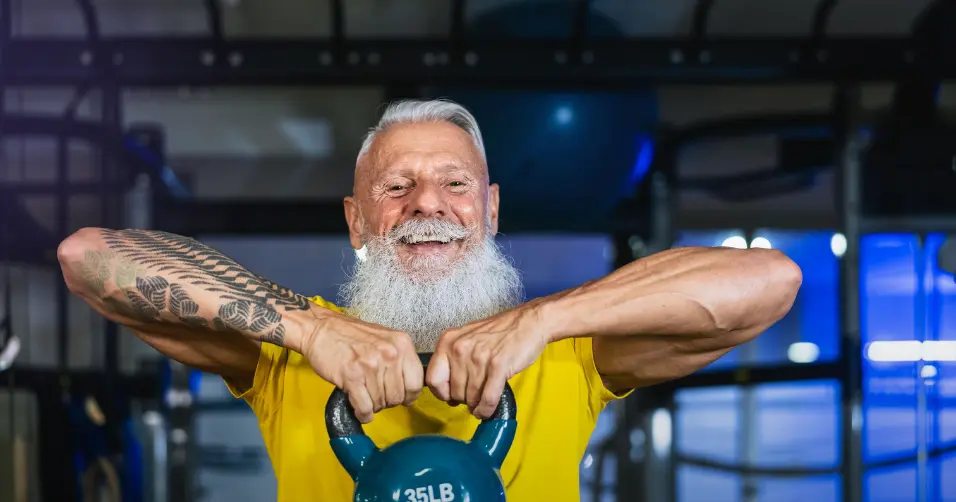
Sarcopenia is an age-related decline in muscle mass and strength, highlighting the necessity of resistance exercise and proper nutrition in older adults.
This article is educational and not intended to diagnose, treat, or suggest any specific intervention, and should not replace qualified medical advice.

Sarcopenia is age-related muscle loss affecting strength and mobility.

How to Prevent Sarcopenia?

Sarcopenia, the age-related loss of muscle mass, can be slowed with resistance training and adequate protein intake.

Preventing sarcopenia, or age-related muscle loss, requires regular activity and proper nutrition. Strength training is the most effective strategy to slow or reverse loss. Adequate protein intake supports muscle repair and maintenance. Avoiding long sedentary periods keeps muscles active. Early prevention is better than trying to rebuild muscle later in life.

  • Resistance training activates muscle fibers that otherwise shrink with age, slowing decline.

  • Protein-rich meals spread throughout the day supply constant building blocks for muscle repair.

  • Staying active prevents disuse, a major cause of muscle atrophy in older adults.

  • Preventing sarcopenia improves balance and reduces risk of falls in later years.

Preventing sarcopenia, or age-related muscle loss, requires regular activity and proper nutrition. Strength training is the most effective strategy to slow or reverse loss. Adequate protein intake supports muscle repair and maintenance. Avoiding long sedentary periods keeps muscles active. Early prevention is better than trying to rebuild muscle later in life.

  • Resistance training activates muscle fibers that otherwise shrink with age, slowing decline.

  • Protein-rich meals spread throughout the day supply constant building blocks for muscle repair.

  • Staying active prevents disuse, a major cause of muscle atrophy in older adults.

  • Preventing sarcopenia improves balance and reduces risk of falls in later years.

What Is Sarcopenia?

Sarcopenia is the age-related loss of muscle mass and strength.

Sarcopenia is the gradual loss of muscle mass, strength, and function that occurs with aging. It usually begins in middle age and accelerates after the age of 60. Causes include reduced physical activity, hormonal changes, and inadequate protein intake. Sarcopenia increases the risk of falls, frailty, and loss of independence. Regular resistance training and proper nutrition are the main ways to slow its progression.

  • Age link: Muscle loss becomes more pronounced in older adults due to hormonal decline and inactivity.

  • Health risks: Increases likelihood of falls, fractures, and disability.

  • Prevention: Strength training and protein-rich diets help maintain muscle mass.

  • Nutrient role: Vitamin D and omega-3s may also support muscle health.

Sarcopenia is the gradual loss of muscle mass, strength, and function that occurs with aging. It usually begins in middle age and accelerates after the age of 60. Causes include reduced physical activity, hormonal changes, and inadequate protein intake. Sarcopenia increases the risk of falls, frailty, and loss of independence. Regular resistance training and proper nutrition are the main ways to slow its progression.

  • Age link: Muscle loss becomes more pronounced in older adults due to hormonal decline and inactivity.

  • Health risks: Increases likelihood of falls, fractures, and disability.

  • Prevention: Strength training and protein-rich diets help maintain muscle mass.

  • Nutrient role: Vitamin D and omega-3s may also support muscle health.

How Does Sarcopenia Impact Your Health?

Sarcopenia impacts health by reducing muscle strength and mobility, raising fall and frailty risks.

Sarcopenia, or age-related muscle loss, has major health effects. It lowers strength and mobility, increasing risk of falls and fractures. Muscle loss also reduces metabolism, which promotes fat gain. Weak muscles strain daily tasks, reducing independence. Preventing sarcopenia helps preserve quality of life as people age.

  • Weakened muscles increase the chance of falls, often leading to serious injury.

  • Reduced muscle mass slows metabolism, raising fat storage and health risks.

  • Loss of strength makes daily activities like climbing stairs or carrying groceries harder.

  • Sarcopenia lowers independence, often requiring outside help for basic needs.

Sarcopenia, or age-related muscle loss, has major health effects. It lowers strength and mobility, increasing risk of falls and fractures. Muscle loss also reduces metabolism, which promotes fat gain. Weak muscles strain daily tasks, reducing independence. Preventing sarcopenia helps preserve quality of life as people age.

  • Weakened muscles increase the chance of falls, often leading to serious injury.

  • Reduced muscle mass slows metabolism, raising fat storage and health risks.

  • Loss of strength makes daily activities like climbing stairs or carrying groceries harder.

  • Sarcopenia lowers independence, often requiring outside help for basic needs.

What We Often Get Wrong About Sarcopenia?

Sarcopenia is often seen as inevitable aging, but resistance training can slow or reverse this muscle loss.

A common misconception about sarcopenia is that it only affects the very old. In reality, muscle loss can start in midlife. Another myth is that normal activity like walking prevents it, but resistance training is necessary. Many assume eating more calories stops sarcopenia, but protein intake and exercise matter more. Some also think muscle loss is inevitable, though lifestyle changes can slow it greatly.

  • Muscle decline begins earlier than many realize, often in the 40s.

  • Walking alone cannot maintain muscle mass; strength training is essential.

  • Extra calories without protein do not protect against muscle breakdown.

  • Preventive training slows sarcopenia, improving strength and independence later in life.

A common misconception about sarcopenia is that it only affects the very old. In reality, muscle loss can start in midlife. Another myth is that normal activity like walking prevents it, but resistance training is necessary. Many assume eating more calories stops sarcopenia, but protein intake and exercise matter more. Some also think muscle loss is inevitable, though lifestyle changes can slow it greatly.

  • Muscle decline begins earlier than many realize, often in the 40s.

  • Walking alone cannot maintain muscle mass; strength training is essential.

  • Extra calories without protein do not protect against muscle breakdown.

  • Preventive training slows sarcopenia, improving strength and independence later in life.

Key Sarcopenia Indicators You May Want to Track

Key sarcopenia indicators are grip strength, walking speed, and muscle mass measurements.

Key sarcopenia indicators include muscle mass, grip strength, and walking speed. Imaging scans like DXA can confirm muscle loss. Daily function tests, such as rising from a chair, reveal mobility decline. Weight loss combined with weakness often signals muscle wasting. Regular assessment is vital as early sarcopenia can be subtle.

  • Grip strength tests are simple but highly predictive of muscle health.

  • DXA scans track changes in lean muscle mass over time.

  • Walking speed below normal indicates functional decline linked with sarcopenia.

  • Inability to stand easily from sitting reflects lower body muscle weakness.

Key sarcopenia indicators include muscle mass, grip strength, and walking speed. Imaging scans like DXA can confirm muscle loss. Daily function tests, such as rising from a chair, reveal mobility decline. Weight loss combined with weakness often signals muscle wasting. Regular assessment is vital as early sarcopenia can be subtle.

  • Grip strength tests are simple but highly predictive of muscle health.

  • DXA scans track changes in lean muscle mass over time.

  • Walking speed below normal indicates functional decline linked with sarcopenia.

  • Inability to stand easily from sitting reflects lower body muscle weakness.

What Causes Sarcopenia?

Changes in sarcopenia are caused by reduced activity, poor diet, and aging.

Changes in sarcopenia result from aging, inactivity, and diet. Muscle naturally declines with age, but disuse accelerates it. Protein deficiency prevents repair and maintenance of muscle fibers. Chronic illness or inflammation further worsens sarcopenia. Resistance training slows or even reverses some of these changes.

  • Aging reduces muscle protein synthesis, gradually lowering muscle mass.

  • Long periods of inactivity speed up muscle atrophy.

  • Low protein intake starves muscles of building blocks, worsening loss.

  • Exercise stimulates muscle growth signals, slowing sarcopenia progression.

Changes in sarcopenia result from aging, inactivity, and diet. Muscle naturally declines with age, but disuse accelerates it. Protein deficiency prevents repair and maintenance of muscle fibers. Chronic illness or inflammation further worsens sarcopenia. Resistance training slows or even reverses some of these changes.

  • Aging reduces muscle protein synthesis, gradually lowering muscle mass.

  • Long periods of inactivity speed up muscle atrophy.

  • Low protein intake starves muscles of building blocks, worsening loss.

  • Exercise stimulates muscle growth signals, slowing sarcopenia progression.

Does Sarcopenia Relate to Longevity?

Sarcopenia reduces longevity because muscle loss increases falls, frailty, and disability.

Sarcopenia shortens longevity by reducing strength and independence. Muscle loss raises fall and fracture risks, which are linked with higher mortality in older adults. It also lowers metabolism, promoting fat gain and related diseases. Preventing sarcopenia helps extend both lifespan and health span. Active muscle preservation is key for aging well.

  • Muscle loss accelerates frailty, leading to reduced survival after injury.

  • Sarcopenia lowers energy use, contributing to obesity and metabolic illness.

  • Resistance training and protein intake slow sarcopenia, improving longevity.

  • Maintaining muscle strength preserves independence, a key survival factor in old age.

Sarcopenia shortens longevity by reducing strength and independence. Muscle loss raises fall and fracture risks, which are linked with higher mortality in older adults. It also lowers metabolism, promoting fat gain and related diseases. Preventing sarcopenia helps extend both lifespan and health span. Active muscle preservation is key for aging well.

  • Muscle loss accelerates frailty, leading to reduced survival after injury.

  • Sarcopenia lowers energy use, contributing to obesity and metabolic illness.

  • Resistance training and protein intake slow sarcopenia, improving longevity.

  • Maintaining muscle strength preserves independence, a key survival factor in old age.

What Can Go Wrong With Sarcopenia?

With sarcopenia, what can go wrong is frailty and higher fall and fracture risk.

With sarcopenia, what can go wrong is accelerated muscle loss. Weak muscles raise fall risk and dependence on others. Reduced metabolism worsens obesity and diabetes risk. Ignoring sarcopenia leads to loss of independence in older age. Without intervention, it shortens lifespan significantly.

  • Falls from weak muscles cause fractures, which reduce survival rates in elderly.

  • Loss of strength prevents daily tasks, leading to dependency.

  • Lower metabolism from muscle loss raises obesity-related disease risk.

  • Unchecked sarcopenia accelerates frailty and reduces quality of life.

With sarcopenia, what can go wrong is accelerated muscle loss. Weak muscles raise fall risk and dependence on others. Reduced metabolism worsens obesity and diabetes risk. Ignoring sarcopenia leads to loss of independence in older age. Without intervention, it shortens lifespan significantly.

  • Falls from weak muscles cause fractures, which reduce survival rates in elderly.

  • Loss of strength prevents daily tasks, leading to dependency.

  • Lower metabolism from muscle loss raises obesity-related disease risk.

  • Unchecked sarcopenia accelerates frailty and reduces quality of life.

How Does Sarcopenia Vary With Age?

Sarcopenia varies with age by worsening after age 50, leading to faster muscle loss.

Sarcopenia is strongly age-related, usually starting in the 40s. Muscle mass declines slowly at first, then accelerates after 60. Younger people are mostly protected unless inactive or malnourished. In older adults, sarcopenia can severely affect independence. Prevention is best started early with training and nutrition.

  • Muscle loss begins in midlife, often unnoticed at first.

  • After 60, sarcopenia accelerates, causing major strength loss.

  • Younger adults rarely experience sarcopenia unless severely inactive.

  • Older adults benefit most from strength training to preserve mobility.

Sarcopenia is strongly age-related, usually starting in the 40s. Muscle mass declines slowly at first, then accelerates after 60. Younger people are mostly protected unless inactive or malnourished. In older adults, sarcopenia can severely affect independence. Prevention is best started early with training and nutrition.

  • Muscle loss begins in midlife, often unnoticed at first.

  • After 60, sarcopenia accelerates, causing major strength loss.

  • Younger adults rarely experience sarcopenia unless severely inactive.

  • Older adults benefit most from strength training to preserve mobility.

How Does Your Lifestyle Affect Sarcopenia?

Lifestyle affects sarcopenia by activity level, diet protein intake, and sedentary behavior.

Your lifestyle directly impacts sarcopenia risk. Inactive routines accelerate muscle loss. Protein-poor diets worsen the problem over time. Regular resistance training prevents or reverses sarcopenia. Active, well-fed lifestyles maintain strength into older age.

  • Sitting too much accelerates muscle breakdown with age.

  • Low-protein diets deprive muscles of building blocks for maintenance.

  • Strength training routines prevent sarcopenia progression.

  • Active lifestyles preserve independence by maintaining muscle mass.

Your lifestyle directly impacts sarcopenia risk. Inactive routines accelerate muscle loss. Protein-poor diets worsen the problem over time. Regular resistance training prevents or reverses sarcopenia. Active, well-fed lifestyles maintain strength into older age.

  • Sitting too much accelerates muscle breakdown with age.

  • Low-protein diets deprive muscles of building blocks for maintenance.

  • Strength training routines prevent sarcopenia progression.

  • Active lifestyles preserve independence by maintaining muscle mass.

How Does Nutrition Impact Sarcopenia?

Nutrition impacts sarcopenia by protein intake, vitamin D, and overall calories.

Nutrition strongly affects sarcopenia progression. Adequate protein intake is essential for muscle maintenance. Vitamin D supports muscle strength and reduces weakness. Malnutrition accelerates muscle loss, especially in older adults. Proper nutrition paired with training slows sarcopenia significantly.

  • Protein spread across meals supports continuous muscle repair.

  • Vitamin D deficiency worsens muscle weakness and accelerates sarcopenia.

  • Malnourished seniors lose muscle faster, raising frailty risk.

  • Balanced diets improve response to strength training in older adults.

Nutrition strongly affects sarcopenia progression. Adequate protein intake is essential for muscle maintenance. Vitamin D supports muscle strength and reduces weakness. Malnutrition accelerates muscle loss, especially in older adults. Proper nutrition paired with training slows sarcopenia significantly.

  • Protein spread across meals supports continuous muscle repair.

  • Vitamin D deficiency worsens muscle weakness and accelerates sarcopenia.

  • Malnourished seniors lose muscle faster, raising frailty risk.

  • Balanced diets improve response to strength training in older adults.

What Supplements May Aid Sarcopenia?

Supplements that may aid sarcopenia are whey protein and creatine, which support muscle preservation.

Certain supplements may slow sarcopenia. Protein powders help older adults reach daily protein needs. Creatine supports muscle strength and performance. Vitamin D strengthens muscles and lowers fall risk. Combining supplements with resistance training is most effective.

  • Protein powders ensure sufficient intake when appetite is low in seniors.

  • Creatine preserves strength and improves muscle response to training.

  • Vitamin D deficiency worsens sarcopenia, so supplementation helps correction.

  • Supplements enhance results but cannot replace regular exercise.

Certain supplements may slow sarcopenia. Protein powders help older adults reach daily protein needs. Creatine supports muscle strength and performance. Vitamin D strengthens muscles and lowers fall risk. Combining supplements with resistance training is most effective.

  • Protein powders ensure sufficient intake when appetite is low in seniors.

  • Creatine preserves strength and improves muscle response to training.

  • Vitamin D deficiency worsens sarcopenia, so supplementation helps correction.

  • Supplements enhance results but cannot replace regular exercise.

Can Fasting Impact Sarcopenia?

Fasting can impact sarcopenia by risking muscle loss if protein intake is too low during eating windows.

Fasting can reduce risk of sarcopenia if managed carefully, but may also worsen it. Short fasting windows combined with high protein meals support muscle preservation. Extended fasting without protein intake accelerates muscle loss. Resistance training is key to protecting muscle during fasting. Used correctly, fasting does not have to worsen sarcopenia.

  • Intermittent fasting with protein-rich meals preserves lean tissue.

  • Prolonged fasting without protein speeds muscle breakdown, worsening sarcopenia.

  • Exercise during fasting periods protects muscle mass and strength.

  • Balanced fasting cycles help reduce fat without sacrificing muscle.

Fasting can reduce risk of sarcopenia if managed carefully, but may also worsen it. Short fasting windows combined with high protein meals support muscle preservation. Extended fasting without protein intake accelerates muscle loss. Resistance training is key to protecting muscle during fasting. Used correctly, fasting does not have to worsen sarcopenia.

  • Intermittent fasting with protein-rich meals preserves lean tissue.

  • Prolonged fasting without protein speeds muscle breakdown, worsening sarcopenia.

  • Exercise during fasting periods protects muscle mass and strength.

  • Balanced fasting cycles help reduce fat without sacrificing muscle.

How Your Workout Regimen Affects Sarcopenia?

Your workout regimen affects sarcopenia by slowing age-related muscle loss with resistance training.

Your workout regimen influences sarcopenia risk strongly. Strength training preserves and builds muscle into older age. Cardio supports overall energy balance but does less for muscle mass. Sedentary lifestyles accelerate sarcopenia development. Consistent training prevents decline in mobility and strength.

  • Resistance training is the best tool against muscle loss with age.

  • Cardio improves health but must be combined with strength training for sarcopenia prevention.

  • Sedentary living causes faster muscle decline in midlife and beyond.

  • Consistent workouts preserve independence and reduce fall risk in old age.

Your workout regimen influences sarcopenia risk strongly. Strength training preserves and builds muscle into older age. Cardio supports overall energy balance but does less for muscle mass. Sedentary lifestyles accelerate sarcopenia development. Consistent training prevents decline in mobility and strength.

  • Resistance training is the best tool against muscle loss with age.

  • Cardio improves health but must be combined with strength training for sarcopenia prevention.

  • Sedentary living causes faster muscle decline in midlife and beyond.

  • Consistent workouts preserve independence and reduce fall risk in old age.

What's the Latest Research on Sarcopenia?

Latest research on sarcopenia suggests protein plus resistance training is the most effective prevention strategy.

The latest research on sarcopenia focuses on prevention through nutrition and exercise. Studies confirm that resistance training remains the most effective intervention. High-protein diets slow muscle loss, especially in older adults. Researchers are also testing combined supplements like protein plus creatine for better results. Large studies link sarcopenia with higher mortality, underscoring the need for prevention.

  • Resistance training continues to be proven as the strongest anti-sarcopenia measure.

  • Protein-rich diets reduce muscle decline in aging populations.

  • Creatine combined with protein shows promising results in new trials.

  • Research highlights sarcopenia as a predictor of reduced lifespan if unmanaged.

The latest research on sarcopenia focuses on prevention through nutrition and exercise. Studies confirm that resistance training remains the most effective intervention. High-protein diets slow muscle loss, especially in older adults. Researchers are also testing combined supplements like protein plus creatine for better results. Large studies link sarcopenia with higher mortality, underscoring the need for prevention.

  • Resistance training continues to be proven as the strongest anti-sarcopenia measure.

  • Protein-rich diets reduce muscle decline in aging populations.

  • Creatine combined with protein shows promising results in new trials.

  • Research highlights sarcopenia as a predictor of reduced lifespan if unmanaged.

How Does Bulking Influence Sarcopenia?

Bulking helps counter sarcopenia, or age-related muscle loss, by promoting muscle protein synthesis.

Bulking influences sarcopenia by helping preserve or rebuild muscle in people losing mass. Extra calories combined with strength training can slow age-related decline. Adequate protein is crucial. Gains depend heavily on training consistency. Surpluses should stay moderate to limit fat gain.

  • Provides energy for repairing age-weakened muscle.

  • Supports protein synthesis which counteracts decline.

  • Combines with resistance exercise for best results.

  • Avoids muscle loss caused by chronic deficits.


Bulking influences sarcopenia by helping preserve or rebuild muscle in people losing mass. Extra calories combined with strength training can slow age-related decline. Adequate protein is crucial. Gains depend heavily on training consistency. Surpluses should stay moderate to limit fat gain.

  • Provides energy for repairing age-weakened muscle.

  • Supports protein synthesis which counteracts decline.

  • Combines with resistance exercise for best results.

  • Avoids muscle loss caused by chronic deficits.


Does Creatine Support Aging Muscle?

Creatine could support aging muscle by helping maintain muscle energy and strength that typically decline with age.

Aging muscles often show lower creatine stores, so supplementation may help maintain strength. It supports daily movement by improving power output. Some studies show improved muscle performance in older adults. Its effect remains supportive, not corrective. Regular activity enhances benefits.

  • Helps preserve strength by boosting ATP supply. This aids functional tasks.

  • Useful for resistance training in older adults. Strength gains may improve confidence.

  • Supports muscle quality when paired with exercise. Movement remains key.

Aging muscles often show lower creatine stores, so supplementation may help maintain strength. It supports daily movement by improving power output. Some studies show improved muscle performance in older adults. Its effect remains supportive, not corrective. Regular activity enhances benefits.

  • Helps preserve strength by boosting ATP supply. This aids functional tasks.

  • Useful for resistance training in older adults. Strength gains may improve confidence.

  • Supports muscle quality when paired with exercise. Movement remains key.

How Does Coconut Oil Affect Heart Health?

Coconut oil contains medium-chain fats that may raise HDL, the "good" cholesterol, but effects on heart health vary.

Coconut oil affects heart health through its high saturated-fat content. Saturated fat can raise LDL cholesterol, which influences cardiovascular risk. Some studies show it also raises HDL, the so-called “good” cholesterol. Overall effects depend on total diet quality. Moderation remains important.

  • Saturated fat load: High levels may raise LDL.

  • HDL increase: Some users see higher protective cholesterol.

  • Diet context: Effects shift with overall fat balance.

  • Portion caution: Use sparingly for heart considerations.


Coconut oil affects heart health through its high saturated-fat content. Saturated fat can raise LDL cholesterol, which influences cardiovascular risk. Some studies show it also raises HDL, the so-called “good” cholesterol. Overall effects depend on total diet quality. Moderation remains important.

  • Saturated fat load: High levels may raise LDL.

  • HDL increase: Some users see higher protective cholesterol.

  • Diet context: Effects shift with overall fat balance.

  • Portion caution: Use sparingly for heart considerations.


How Does GH Relate to Leptin?

GH relates to leptin through metabolic regulation affecting fat use and appetite.

Growth hormone (GH) relates to leptin because both connect energy use and body composition. GH generally promotes fat use, while leptin signals stored energy. When leptin is high, GH responses may change during sleep and exercise. Their balance impacts fuel choice. Interactions vary by body fat level.

  • Higher leptin reflects higher fat stores which may alter GH release patterns.

  • GH promotes fat use affecting leptin levels over time.

  • Both shift during dieting as energy stores change.

Growth hormone (GH) relates to leptin because both connect energy use and body composition. GH generally promotes fat use, while leptin signals stored energy. When leptin is high, GH responses may change during sleep and exercise. Their balance impacts fuel choice. Interactions vary by body fat level.

  • Higher leptin reflects higher fat stores which may alter GH release patterns.

  • GH promotes fat use affecting leptin levels over time.

  • Both shift during dieting as energy stores change.

Why Does Muscle Atrophy Occur?

Muscle atrophy occurs from inactivity, nutrient deficiency, or hormonal imbalance.

Muscle atrophy occurs when muscle cells get fewer activity signals or less nutrition. It can follow immobilization, illness, or long periods of inactivity. Hormonal changes and aging also increase breakdown. Reduced nerve stimulation can weaken fibers further. Recovery focuses on gradually restoring load and fueling muscles adequately.

  • Disuse impact: Without tension, muscle enzymes shift toward breakdown. This causes rapid size loss.

  • Energy deficit: Low calories encourage the body to use muscle as fuel. This accelerates atrophy.

  • Illness effects: Inflammation and bed rest contribute to loss. Controlled movement helps slow it.


Muscle atrophy occurs when muscle cells get fewer activity signals or less nutrition. It can follow immobilization, illness, or long periods of inactivity. Hormonal changes and aging also increase breakdown. Reduced nerve stimulation can weaken fibers further. Recovery focuses on gradually restoring load and fueling muscles adequately.

  • Disuse impact: Without tension, muscle enzymes shift toward breakdown. This causes rapid size loss.

  • Energy deficit: Low calories encourage the body to use muscle as fuel. This accelerates atrophy.

  • Illness effects: Inflammation and bed rest contribute to loss. Controlled movement helps slow it.


How Does Sarcopenia Affect Hypertrophy?

Sarcopenia, age-related muscle loss, limits hypertrophy potential by reducing anabolic response.

Sarcopenia lowers hypertrophy potential by shrinking fibers and reducing strength with age. It results from inactivity, hormonal shifts, and lower protein intake. These changes reduce the body’s ability to respond to training stress. Hypertrophy becomes slower but still possible with proper loading. Consistent activity helps offset sarcopenia’s impact.

  • Lower hormone levels weaken protein building signals in muscle.

  • Nerve degradation reduces fiber activation during exercise.

  • Reduced appetite may limit essential nutrients for repair.

  • Weaker recovery slows adaptation, requiring conservative training.


Sarcopenia lowers hypertrophy potential by shrinking fibers and reducing strength with age. It results from inactivity, hormonal shifts, and lower protein intake. These changes reduce the body’s ability to respond to training stress. Hypertrophy becomes slower but still possible with proper loading. Consistent activity helps offset sarcopenia’s impact.

  • Lower hormone levels weaken protein building signals in muscle.

  • Nerve degradation reduces fiber activation during exercise.

  • Reduced appetite may limit essential nutrients for repair.

  • Weaker recovery slows adaptation, requiring conservative training.


Does Protein Intake Affect Muscle Loss?

Adequate protein intake reduces muscle loss during calorie deficits.

Protein intake affects muscle loss by influencing how the body balances breakdown and repair. Low intake can let muscle tissue degrade faster, especially during calorie deficits. Adequate intake helps preserve lean mass when dieting or aging. Older adults may require slightly more protein because muscle becomes less responsive to amino acids. Exercise and total calories also shape how much muscle the body keeps.

  • Breakdown vs repair: Protein provides amino acids that counter muscle breakdown.

  • Calorie deficit impact: Eating less can increase muscle loss unless enough protein is present.

  • Aging factor: Age reduces muscle sensitivity, increasing protein needs for maintenance.

  • Activity level: Strength work improves how well the body uses protein to protect muscle.

  • Meal timing: Regular intake helps keep muscle-building signals active.

Protein intake affects muscle loss by influencing how the body balances breakdown and repair. Low intake can let muscle tissue degrade faster, especially during calorie deficits. Adequate intake helps preserve lean mass when dieting or aging. Older adults may require slightly more protein because muscle becomes less responsive to amino acids. Exercise and total calories also shape how much muscle the body keeps.

  • Breakdown vs repair: Protein provides amino acids that counter muscle breakdown.

  • Calorie deficit impact: Eating less can increase muscle loss unless enough protein is present.

  • Aging factor: Age reduces muscle sensitivity, increasing protein needs for maintenance.

  • Activity level: Strength work improves how well the body uses protein to protect muscle.

  • Meal timing: Regular intake helps keep muscle-building signals active.

Medical Disclaimer: All content on this website is intended solely for informational and educational purposes and should not be interpreted as a substitute for professional medical advice, diagnosis, or treatment, nor as encouragement or promotion for or against any particular use, product, or activity. Results may vary and are not guaranteed. No doctor–patient relationship is created by your use of this content. Always consult a qualified healthcare provider, nutritionist, or other relevant expert before starting or changing any supplement, diet, exercise, or lifestyle program. This website can contain errors. Check important information. Read our full Disclaimer.

StatusTerms of ServicePrivacy PolicyDisclaimerAbout Myopedia.

©2025 Myopedia™. All rights reserved.

Medical Disclaimer: All content on this website is intended solely for informational and educational purposes and should not be interpreted as a substitute for professional medical advice, diagnosis, or treatment, nor as encouragement or promotion for or against any particular use, product, or activity. Results may vary and are not guaranteed. No doctor–patient relationship is created by your use of this content. Always consult a qualified healthcare provider, nutritionist, or other relevant expert before starting or changing any supplement, diet, exercise, or lifestyle program. This website can contain errors. Check important information. Read our full Disclaimer.

StatusTerms of ServicePrivacy PolicyDisclaimerAbout Myopedia.

©2025 Myopedia™. All rights reserved.

Medical Disclaimer: All content on this website is intended solely for informational and educational purposes and should not be interpreted as a substitute for professional medical advice, diagnosis, or treatment, nor as encouragement or promotion for or against any particular use, product, or activity. Results may vary and are not guaranteed. No doctor–patient relationship is created by your use of this content. Always consult a qualified healthcare provider, nutritionist, or other relevant expert before starting or changing any supplement, diet, exercise, or lifestyle program. This website can contain errors. Check important information. Read our full Disclaimer.

StatusTerms of ServicePrivacy PolicyDisclaimerAbout Myopedia.

©2025 Myopedia™. All rights reserved.