Body

Muscle Hypertrophy

Your Complete Guide to Muscle Hypertrophy

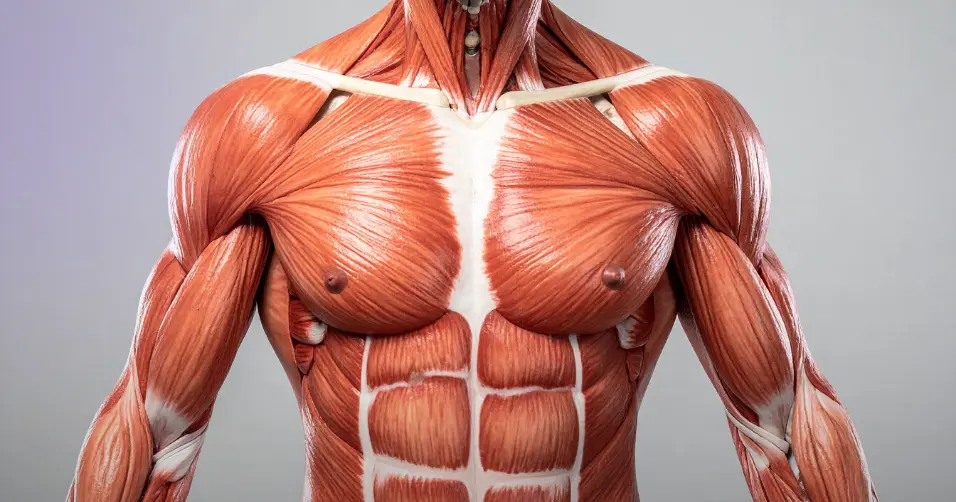
Muscle Hypertrophy is the process of increasing muscle size through resistance training and proper nutrition, essential for building strength and physique.
This article is educational and not intended to diagnose, treat, or suggest any specific intervention, and should not replace qualified medical advice.


Muscle hypertrophy is the process of increasing muscle size.

How to Optimize Muscle Hypertrophy?

Muscle hypertrophy can be maximized with progressive resistance training and adequate protein intake.

To optimize muscle hypertrophy, progressive overload with resistance training is essential. Muscles grow when challenged with slightly heavier weights or higher volume over time. Recovery through proper rest and protein intake ensures fibers repair and enlarge. Training variety, such as mixing compound and isolation movements, prevents adaptation plateaus. Consistency and patience are crucial, as hypertrophy takes weeks to months of effort.

  • Resistance training 2–4 times per week allows time for both growth and recovery.

  • Protein intake after workouts supports muscle repair and adaptation.

  • Sleep of 7–9 hours per night promotes anabolic hormone release.

  • Gradually increasing sets, reps, or weight ensures continual growth stimulation.

To optimize muscle hypertrophy, progressive overload with resistance training is essential. Muscles grow when challenged with slightly heavier weights or higher volume over time. Recovery through proper rest and protein intake ensures fibers repair and enlarge. Training variety, such as mixing compound and isolation movements, prevents adaptation plateaus. Consistency and patience are crucial, as hypertrophy takes weeks to months of effort.

  • Resistance training 2–4 times per week allows time for both growth and recovery.

  • Protein intake after workouts supports muscle repair and adaptation.

  • Sleep of 7–9 hours per night promotes anabolic hormone release.

  • Gradually increasing sets, reps, or weight ensures continual growth stimulation.

What Is Muscle Hypertrophy?

Muscle Hypertrophy is the increase in muscle size due to training or other stimuli.

Muscle hypertrophy is the process of muscles increasing in size due to training and proper nutrition. It occurs when resistance exercise causes small tears in muscle fibers, which then repair and grow stronger and larger. Protein intake and rest are essential for this recovery and growth process. Hormones such as testosterone and growth hormone also play a supportive role. Hypertrophy is a key goal in strength and bodybuilding training programs.

  • Muscle repair: Resistance training creates small muscle fiber damage, which triggers rebuilding and growth.

  • Protein need: Adequate protein intake is critical to support the repair process and muscle development.

  • Hormonal support: Natural hormones help regulate and accelerate muscle-building responses.

  • Training style: Moderate-to-heavy resistance training with progressive overload is most effective for hypertrophy.

Muscle hypertrophy is the process of muscles increasing in size due to training and proper nutrition. It occurs when resistance exercise causes small tears in muscle fibers, which then repair and grow stronger and larger. Protein intake and rest are essential for this recovery and growth process. Hormones such as testosterone and growth hormone also play a supportive role. Hypertrophy is a key goal in strength and bodybuilding training programs.

  • Muscle repair: Resistance training creates small muscle fiber damage, which triggers rebuilding and growth.

  • Protein need: Adequate protein intake is critical to support the repair process and muscle development.

  • Hormonal support: Natural hormones help regulate and accelerate muscle-building responses.

  • Training style: Moderate-to-heavy resistance training with progressive overload is most effective for hypertrophy.

How Does Muscle Hypertrophy Impact Your Health?

Muscle hypertrophy impacts health by strengthening bones, improving metabolism, and enhancing mobility.

Muscle hypertrophy impacts health by increasing muscle size and strength, which supports movement and stability. Larger muscles improve metabolism by burning more calories at rest. Hypertrophy also protects joints by stabilizing them during activity. It enhances bone density, reducing fracture risks. However, excessive focus on hypertrophy without balance may strain joints or cause imbalances.

  • Increased muscle mass improves strength and physical capability in daily life.

  • Stronger muscles help prevent falls and injuries by supporting balance.

  • Hypertrophy improves metabolic rate, aiding in weight management.

  • Overemphasis on muscle size without flexibility work may cause mobility issues.

Muscle hypertrophy impacts health by increasing muscle size and strength, which supports movement and stability. Larger muscles improve metabolism by burning more calories at rest. Hypertrophy also protects joints by stabilizing them during activity. It enhances bone density, reducing fracture risks. However, excessive focus on hypertrophy without balance may strain joints or cause imbalances.

  • Increased muscle mass improves strength and physical capability in daily life.

  • Stronger muscles help prevent falls and injuries by supporting balance.

  • Hypertrophy improves metabolic rate, aiding in weight management.

  • Overemphasis on muscle size without flexibility work may cause mobility issues.

What We Often Get Wrong About Muscle Hypertrophy?

Muscle hypertrophy is often mistaken as only size increase, but it also involves cellular changes like more contractile proteins.

A common misconception about muscle hypertrophy is that lifting heavy weights alone guarantees muscle growth. Growth requires not only intensity but also proper nutrition and rest. Some assume hypertrophy happens quickly, but visible results take weeks or months. Another myth is that only men can achieve significant hypertrophy, when women can build muscle too. People also confuse hypertrophy with strength, though they are related but not identical.

  • Without adequate protein and calories, training alone does not produce large muscle gains.

  • Hypertrophy is a slow process, contradicting claims of rapid transformations.

  • Both men and women can increase muscle size, though hormonal differences affect the rate.

  • Strength and hypertrophy often overlap, but size does not always equal maximum strength.

A common misconception about muscle hypertrophy is that lifting heavy weights alone guarantees muscle growth. Growth requires not only intensity but also proper nutrition and rest. Some assume hypertrophy happens quickly, but visible results take weeks or months. Another myth is that only men can achieve significant hypertrophy, when women can build muscle too. People also confuse hypertrophy with strength, though they are related but not identical.

  • Without adequate protein and calories, training alone does not produce large muscle gains.

  • Hypertrophy is a slow process, contradicting claims of rapid transformations.

  • Both men and women can increase muscle size, though hormonal differences affect the rate.

  • Strength and hypertrophy often overlap, but size does not always equal maximum strength.

Key Muscle Hypertrophy Indicators You May Want to Track

Key muscle hypertrophy metrics are muscle thickness, circumference, and strength progression.

Key muscle hypertrophy indicators include increases in muscle size, strength, and visual changes in body composition. Tape measurements and body scans can track growth over time. Performance in resistance exercises often improves alongside hypertrophy. Muscle fullness and firmness are also physical signs. Consistency in progress reflects effective training and recovery balance.

  • Increases in circumference measurements show physical muscle growth.

  • Body composition scans confirm lean mass gains versus fat loss.

  • Progressive improvements in strength indicate hypertrophy support.

  • Muscle firmness and fullness are visible indicators of growth response.

Key muscle hypertrophy indicators include increases in muscle size, strength, and visual changes in body composition. Tape measurements and body scans can track growth over time. Performance in resistance exercises often improves alongside hypertrophy. Muscle fullness and firmness are also physical signs. Consistency in progress reflects effective training and recovery balance.

  • Increases in circumference measurements show physical muscle growth.

  • Body composition scans confirm lean mass gains versus fat loss.

  • Progressive improvements in strength indicate hypertrophy support.

  • Muscle firmness and fullness are visible indicators of growth response.

What Causes Muscle Hypertrophy?

Changes in muscle hypertrophy are caused by training load, protein intake, and hormonal balance.

Changes in muscle hypertrophy are caused by resistance training, nutrition, and hormones. Lifting progressively heavier loads stimulates growth. Protein intake and calorie balance support muscle repair and enlargement. Hormonal factors like testosterone and growth hormone affect growth rate. Without training or food, hypertrophy slows or reverses into atrophy.

  • Progressive overload triggers muscle fiber enlargement through repair.

  • Protein and calories provide building blocks for hypertrophy.

  • Hormones influence the efficiency of growth processes.

  • Inactivity or underfeeding leads to loss of muscle mass.

Changes in muscle hypertrophy are caused by resistance training, nutrition, and hormones. Lifting progressively heavier loads stimulates growth. Protein intake and calorie balance support muscle repair and enlargement. Hormonal factors like testosterone and growth hormone affect growth rate. Without training or food, hypertrophy slows or reverses into atrophy.

  • Progressive overload triggers muscle fiber enlargement through repair.

  • Protein and calories provide building blocks for hypertrophy.

  • Hormones influence the efficiency of growth processes.

  • Inactivity or underfeeding leads to loss of muscle mass.

Does Muscle Hypertrophy Relate to Longevity?

Muscle hypertrophy supports longevity through stronger bones, better metabolism, and reduced frailty.

Muscle hypertrophy supports longevity by increasing strength, stability, and metabolic health. More muscle mass protects bones, lowers fall risk, and improves daily energy use. It also reduces frailty, which is a major risk factor for shorter lifespan. Resistance training for hypertrophy supports cardiovascular and hormonal health indirectly. Excessive hypertrophy focus, however, can strain joints if not balanced.

  • More muscle mass lowers risk of frailty and related complications in older age.

  • Hypertrophy improves metabolism, which helps prevent age-related diseases.

  • Stronger muscles protect joints and bones, reducing fracture risk.

  • Overtraining for hypertrophy can shorten benefits by causing chronic strain.

Muscle hypertrophy supports longevity by increasing strength, stability, and metabolic health. More muscle mass protects bones, lowers fall risk, and improves daily energy use. It also reduces frailty, which is a major risk factor for shorter lifespan. Resistance training for hypertrophy supports cardiovascular and hormonal health indirectly. Excessive hypertrophy focus, however, can strain joints if not balanced.

  • More muscle mass lowers risk of frailty and related complications in older age.

  • Hypertrophy improves metabolism, which helps prevent age-related diseases.

  • Stronger muscles protect joints and bones, reducing fracture risk.

  • Overtraining for hypertrophy can shorten benefits by causing chronic strain.

What Can Go Wrong With Muscle Hypertrophy?

With muscle hypertrophy, what can go wrong is imbalance causing joint strain or overuse injury.

What can go wrong with muscle hypertrophy includes imbalances, injuries, and overtraining. Focusing too much on size without mobility can reduce flexibility. Excess calorie intake for growth may increase fat gain. Improper technique raises risk of joint and tendon injuries. Overemphasis on hypertrophy can neglect endurance and cardiovascular health.

  • Imbalances in training lead to stiffness and reduced mobility.

  • Overeating for growth may add unwanted fat alongside muscle.

  • Heavy lifting with poor form increases injury risk.

  • Neglecting endurance reduces overall fitness despite muscle growth.

What can go wrong with muscle hypertrophy includes imbalances, injuries, and overtraining. Focusing too much on size without mobility can reduce flexibility. Excess calorie intake for growth may increase fat gain. Improper technique raises risk of joint and tendon injuries. Overemphasis on hypertrophy can neglect endurance and cardiovascular health.

  • Imbalances in training lead to stiffness and reduced mobility.

  • Overeating for growth may add unwanted fat alongside muscle.

  • Heavy lifting with poor form increases injury risk.

  • Neglecting endurance reduces overall fitness despite muscle growth.

How Does Muscle Hypertrophy Vary With Age?

Muscle hypertrophy varies with age as gains are slower but still possible with resistance training.

Muscle hypertrophy varies with age depending on hormones and recovery. Younger adults build muscle quickly due to high hormone levels. Middle-aged adults see slower but steady growth with effort. Older adults face natural decline but can still grow muscle with resistance training. Nutrition and consistency become more important with age.

  • Youth experience rapid growth due to natural anabolic hormones.

  • Adults can maintain hypertrophy with structured training programs.

  • Aging lowers growth hormone, slowing hypertrophy rate.

  • Strength training helps older adults regain significant muscle size.

Muscle hypertrophy varies with age depending on hormones and recovery. Younger adults build muscle quickly due to high hormone levels. Middle-aged adults see slower but steady growth with effort. Older adults face natural decline but can still grow muscle with resistance training. Nutrition and consistency become more important with age.

  • Youth experience rapid growth due to natural anabolic hormones.

  • Adults can maintain hypertrophy with structured training programs.

  • Aging lowers growth hormone, slowing hypertrophy rate.

  • Strength training helps older adults regain significant muscle size.

How Does Your Lifestyle Affect Muscle Hypertrophy?

Lifestyle affects muscle hypertrophy through workout intensity, diet, and recovery.

Your lifestyle shapes muscle hypertrophy outcomes through training, diet, and rest. Regular resistance training and proper protein intake support growth. Poor sleep or stress slows recovery and reduces size gains. Inactivity leads to loss instead of hypertrophy. A consistent and balanced lifestyle maximizes results.

  • Resistance training with good nutrition triggers steady hypertrophy.

  • Sleep and stress levels control hormonal support for growth.

  • Sedentary lifestyles reverse gains through atrophy.

  • Consistency over months is crucial for visible hypertrophy changes.

Your lifestyle shapes muscle hypertrophy outcomes through training, diet, and rest. Regular resistance training and proper protein intake support growth. Poor sleep or stress slows recovery and reduces size gains. Inactivity leads to loss instead of hypertrophy. A consistent and balanced lifestyle maximizes results.

  • Resistance training with good nutrition triggers steady hypertrophy.

  • Sleep and stress levels control hormonal support for growth.

  • Sedentary lifestyles reverse gains through atrophy.

  • Consistency over months is crucial for visible hypertrophy changes.

How Does Nutrition Impact Muscle Hypertrophy?

Nutrition impacts muscle hypertrophy by high protein, calorie balance, and leucine-rich foods.

Nutrition impacts muscle hypertrophy directly through calorie balance and protein intake. A calorie surplus supports growth, while protein rebuilds fibers. Carbohydrates provide workout fuel to maintain training intensity. Fats stabilize hormones like testosterone that influence growth. Without adequate nutrition, hypertrophy is minimal even with training.

  • Protein intake ensures fibers repair and enlarge after lifting.

  • Calorie surplus provides the extra energy needed for growth.

  • Carbohydrates sustain strength and endurance for hypertrophy workouts.

  • Healthy fats regulate hormones critical to long-term hypertrophy.

Nutrition impacts muscle hypertrophy directly through calorie balance and protein intake. A calorie surplus supports growth, while protein rebuilds fibers. Carbohydrates provide workout fuel to maintain training intensity. Fats stabilize hormones like testosterone that influence growth. Without adequate nutrition, hypertrophy is minimal even with training.

  • Protein intake ensures fibers repair and enlarge after lifting.

  • Calorie surplus provides the extra energy needed for growth.

  • Carbohydrates sustain strength and endurance for hypertrophy workouts.

  • Healthy fats regulate hormones critical to long-term hypertrophy.

What Supplements May Aid Muscle Hypertrophy?

Supplements that may aid muscle hypertrophy are whey protein, creatine, and leucine-rich amino acids.

Supplements that may aid muscle hypertrophy include protein powders, creatine, and beta-alanine. Protein provides essential amino acids for fiber repair. Creatine increases training intensity and muscle growth potential. Beta-alanine delays fatigue, allowing more productive sets. Essential amino acids (EAAs) can also boost protein synthesis when diet falls short.

  • Protein powders ensure consistent intake for muscle building.

  • Creatine boosts lifting capacity and supports muscle growth.

  • Beta-alanine extends time to fatigue during hypertrophy workouts.

  • EAAs trigger protein synthesis for efficient hypertrophy support.

Supplements that may aid muscle hypertrophy include protein powders, creatine, and beta-alanine. Protein provides essential amino acids for fiber repair. Creatine increases training intensity and muscle growth potential. Beta-alanine delays fatigue, allowing more productive sets. Essential amino acids (EAAs) can also boost protein synthesis when diet falls short.

  • Protein powders ensure consistent intake for muscle building.

  • Creatine boosts lifting capacity and supports muscle growth.

  • Beta-alanine extends time to fatigue during hypertrophy workouts.

  • EAAs trigger protein synthesis for efficient hypertrophy support.

Can Fasting Optimize Muscle Hypertrophy?

Fasting can reduce muscle hypertrophy potential if calorie and protein intake are insufficient in feeding windows.

Fasting may reduce muscle hypertrophy progress if protein and calories are insufficient. Short fasts with proper refeeding usually maintain growth. Extended fasting reduces anabolic hormone activity, slowing hypertrophy. Some intermittent fasting strategies still support hypertrophy if intake is balanced. Careful planning is required to avoid loss of progress.

  • Insufficient protein during fasting slows hypertrophy significantly.

  • Short-term fasting with good feeding windows can preserve growth.

  • Extended fasting reduces hormones like insulin and testosterone.

  • Structured intermittent fasting can still support hypertrophy when done correctly.

Fasting may reduce muscle hypertrophy progress if protein and calories are insufficient. Short fasts with proper refeeding usually maintain growth. Extended fasting reduces anabolic hormone activity, slowing hypertrophy. Some intermittent fasting strategies still support hypertrophy if intake is balanced. Careful planning is required to avoid loss of progress.

  • Insufficient protein during fasting slows hypertrophy significantly.

  • Short-term fasting with good feeding windows can preserve growth.

  • Extended fasting reduces hormones like insulin and testosterone.

  • Structured intermittent fasting can still support hypertrophy when done correctly.

How Your Workout Regimen Affects Muscle Hypertrophy?

Your workout regimen affects muscle hypertrophy by stimulating growth with progressive resistance exercise.

Your workout regimen affects muscle hypertrophy by controlling stimulus and recovery. Resistance training with progressive overload drives growth. High volume supports hypertrophy if paired with nutrition. Too little intensity fails to trigger growth signals. Recovery time is essential to prevent overtraining and injury.

  • Progressive weight increases stimulate fiber enlargement.

  • Training volume and frequency influence hypertrophy rate.

  • Insufficient resistance fails to activate hypertrophy pathways.

  • Rest between sessions allows repair and growth to occur.

Your workout regimen affects muscle hypertrophy by controlling stimulus and recovery. Resistance training with progressive overload drives growth. High volume supports hypertrophy if paired with nutrition. Too little intensity fails to trigger growth signals. Recovery time is essential to prevent overtraining and injury.

  • Progressive weight increases stimulate fiber enlargement.

  • Training volume and frequency influence hypertrophy rate.

  • Insufficient resistance fails to activate hypertrophy pathways.

  • Rest between sessions allows repair and growth to occur.

What's the Latest Research on Muscle Hypertrophy?

Latest research on muscle hypertrophy indicates that training close to failure is key, regardless of heavy or light weights.

The latest research on muscle hypertrophy highlights the importance of mechanical tension and metabolic stress. Studies show that both heavy lifting and moderate loads with volume can stimulate growth. Protein distribution across meals enhances hypertrophy outcomes. Emerging research looks at genetic influence on individual growth response. Recovery markers like sleep and hormone balance are emphasized in recent trials.

  • Heavy and moderate loads both trigger growth via different pathways.

  • Protein spread evenly through the day improves hypertrophy.

  • Genetic studies explain why individuals respond differently to training.

  • Sleep and hormone regulation are critical in hypertrophy success.

The latest research on muscle hypertrophy highlights the importance of mechanical tension and metabolic stress. Studies show that both heavy lifting and moderate loads with volume can stimulate growth. Protein distribution across meals enhances hypertrophy outcomes. Emerging research looks at genetic influence on individual growth response. Recovery markers like sleep and hormone balance are emphasized in recent trials.

  • Heavy and moderate loads both trigger growth via different pathways.

  • Protein spread evenly through the day improves hypertrophy.

  • Genetic studies explain why individuals respond differently to training.

  • Sleep and hormone regulation are critical in hypertrophy success.

Do BCAAs Boost Hypertrophy?

BCAAs support hypertrophy meaning muscle size increase mainly when diet protein is low.

BCAAs may support hypertrophy by helping start the muscle-building process. Their role is supportive, not primary. Total daily protein remains more important. BCAAs can be useful during low-protein periods. Hypertrophy still requires mechanical tension from training.

  • Activates mTOR signaling which initiates muscle protein creation; this effect is small alone.

  • Reduces muscle soreness for some people; this may help maintain training frequency.

  • Works alongside whole protein; results drop if the rest of the diet lacks amino acids.

  • Training volume remains key; supplements only fine-tune results.


BCAAs may support hypertrophy by helping start the muscle-building process. Their role is supportive, not primary. Total daily protein remains more important. BCAAs can be useful during low-protein periods. Hypertrophy still requires mechanical tension from training.

  • Activates mTOR signaling which initiates muscle protein creation; this effect is small alone.

  • Reduces muscle soreness for some people; this may help maintain training frequency.

  • Works alongside whole protein; results drop if the rest of the diet lacks amino acids.

  • Training volume remains key; supplements only fine-tune results.


How Does Bulking Influence Hypertrophy?

Bulking enhances hypertrophy, meaning muscle fiber enlargement from progressive overload and calorie surplus.

Bulking influences hypertrophy by enhancing the body’s ability to build muscle. Hypertrophy requires energy for protein synthesis. A small surplus helps maximize muscle growth without excess fat. Training volume remains essential. Surplus without training offers little benefit.

  • Improves recovery allowing more training sessions.

  • Provides energy for building new fibers.

  • Limits catabolism which protects muscle.

  • Works best with structured programs targeting progressive overload.


Bulking influences hypertrophy by enhancing the body’s ability to build muscle. Hypertrophy requires energy for protein synthesis. A small surplus helps maximize muscle growth without excess fat. Training volume remains essential. Surplus without training offers little benefit.

  • Improves recovery allowing more training sessions.

  • Provides energy for building new fibers.

  • Limits catabolism which protects muscle.

  • Works best with structured programs targeting progressive overload.


Does Creatine Enhance Hypertrophy?

Creatine may support hypertrophy, meaning muscle fiber enlargement, mainly when combined with resistance training.

Creatine helps lifters complete more reps or heavier sets, which supports hypertrophy over time. It does not create muscle without load. The increased training stimulus contributes to size changes. Effects are gradual. Individual responses vary.

  • Boosts workload capacity during hard sets. More tension means more stimulus.

  • Indirect hypertrophy tool, relying on better training, not direct growth. Mechanism remains performance-driven.

  • Water retention in muscles can add fullness. This is temporary and expected.

Creatine helps lifters complete more reps or heavier sets, which supports hypertrophy over time. It does not create muscle without load. The increased training stimulus contributes to size changes. Effects are gradual. Individual responses vary.

  • Boosts workload capacity during hard sets. More tension means more stimulus.

  • Indirect hypertrophy tool, relying on better training, not direct growth. Mechanism remains performance-driven.

  • Water retention in muscles can add fullness. This is temporary and expected.

Does Ecdysterone Influence Hypertrophy?

Ecdysterone may influence hypertrophy by activating anabolic, or muscle-building, cellular signals in early studies.

Ecdysterone may influence hypertrophy by supporting protein synthesis signals. Its impact appears modest. Some studies report increased lean mass. Effects require training stimulus. Absorption and form may alter results.

  • Muscle-growth signals show mild activation in specific studies.

  • Training dependence means results rely on resistance exercise.

  • Body-composition shifts remain small and study-specific.


Ecdysterone may influence hypertrophy by supporting protein synthesis signals. Its impact appears modest. Some studies report increased lean mass. Effects require training stimulus. Absorption and form may alter results.

  • Muscle-growth signals show mild activation in specific studies.

  • Training dependence means results rely on resistance exercise.

  • Body-composition shifts remain small and study-specific.


How Does L-Glutamine Relate to Pea Protein?

L-Glutamine relates to pea protein as both support recovery and nitrogen balance.

L-glutamine relates to pea protein because pea protein contains amino acids including glutamine. Glutamine supports gut comfort, which may help tolerance of plant proteins. Pea protein offers a balanced amino acid profile for general use. Together they can support recovery nutrition. Effects depend on diet variety.

  • Pea protein provides precursors that help natural glutamine levels.

  • Glutamine supports digestion which may ease high-protein meals.

  • Combining both offers steady amino intake.

L-glutamine relates to pea protein because pea protein contains amino acids including glutamine. Glutamine supports gut comfort, which may help tolerance of plant proteins. Pea protein offers a balanced amino acid profile for general use. Together they can support recovery nutrition. Effects depend on diet variety.

  • Pea protein provides precursors that help natural glutamine levels.

  • Glutamine supports digestion which may ease high-protein meals.

  • Combining both offers steady amino intake.

How Does Lean Mass Affect Muscle Growth?

Lean mass affects muscle growth by increasing protein synthesis potential.

Lean mass affects muscle growth by increasing the body’s ability to handle heavier loads. Larger muscles create stronger tension signals that stimulate growth pathways. Recovery also improves because bigger muscles store more glycogen, the energy inside muscle cells. This supports more work per session. Lean mass helps maintain a positive training cycle.

  • Higher training volume becomes possible because larger muscles handle more reps and sets.

  • Better nutrient storage supports longer workouts and faster recovery.

  • Stronger mechanical tension sends clearer growth signals during lifting.

Lean mass affects muscle growth by increasing the body’s ability to handle heavier loads. Larger muscles create stronger tension signals that stimulate growth pathways. Recovery also improves because bigger muscles store more glycogen, the energy inside muscle cells. This supports more work per session. Lean mass helps maintain a positive training cycle.

  • Higher training volume becomes possible because larger muscles handle more reps and sets.

  • Better nutrient storage supports longer workouts and faster recovery.

  • Stronger mechanical tension sends clearer growth signals during lifting.

Does Atrophy Oppose Hypertrophy?

Atrophy opposes hypertrophy since hypertrophy means muscle enlargement.

Atrophy opposes hypertrophy because hypertrophy means muscle enlargement through added proteins. Atrophy reduces those proteins, shrinking fiber size. The two processes reflect opposite biological conditions. Hypertrophy needs overload and nutrition, while atrophy comes from disuse or deficit. Balancing these forces determines overall muscle size.

  • Structural contrast: Hypertrophy builds thicker fibers; atrophy thins them. This directly affects performance.

  • Signal balance: Mechanical load pushes hypertrophy pathways. Inactivity elevates atrophy pathways.

  • Time sensitivity: Atrophy can develop quickly. Hypertrophy takes longer to build.


Atrophy opposes hypertrophy because hypertrophy means muscle enlargement through added proteins. Atrophy reduces those proteins, shrinking fiber size. The two processes reflect opposite biological conditions. Hypertrophy needs overload and nutrition, while atrophy comes from disuse or deficit. Balancing these forces determines overall muscle size.

  • Structural contrast: Hypertrophy builds thicker fibers; atrophy thins them. This directly affects performance.

  • Signal balance: Mechanical load pushes hypertrophy pathways. Inactivity elevates atrophy pathways.

  • Time sensitivity: Atrophy can develop quickly. Hypertrophy takes longer to build.


Does Protein Build Muscle?

Protein builds muscle by promoting muscle protein synthesis.

Protein builds muscle by supplying essential amino acids needed for muscle protein synthesis. This synthesis process repairs small muscle fiber tears created by exercise. Enough protein helps balance breakdown and repair so muscle tissue can grow. Eating protein throughout the day supports consistent amino acid availability. Resistance training makes muscle more sensitive to these amino acids.

  • Essential amino acids: These are amino acids the body cannot make and are required for muscle repair.

  • Exercise pairing: Strength training increases the rate at which muscle uses protein for rebuilding.

  • Repair balance: Protein helps shift the body from muscle breakdown toward muscle rebuilding.

  • Daily distribution: Spreading protein intake may support steadier muscle repair signals.

  • Energy support: Protein helps maintain muscle when total calories are adequate.

Protein builds muscle by supplying essential amino acids needed for muscle protein synthesis. This synthesis process repairs small muscle fiber tears created by exercise. Enough protein helps balance breakdown and repair so muscle tissue can grow. Eating protein throughout the day supports consistent amino acid availability. Resistance training makes muscle more sensitive to these amino acids.

  • Essential amino acids: These are amino acids the body cannot make and are required for muscle repair.

  • Exercise pairing: Strength training increases the rate at which muscle uses protein for rebuilding.

  • Repair balance: Protein helps shift the body from muscle breakdown toward muscle rebuilding.

  • Daily distribution: Spreading protein intake may support steadier muscle repair signals.

  • Energy support: Protein helps maintain muscle when total calories are adequate.

How Does Sarcopenia Affect Hypertrophy?

Sarcopenia affects hypertrophy by lowering muscle cell responsiveness to training stimuli.

Sarcopenia affects hypertrophy by reducing the ability to build new muscle tissue. Hypertrophy means increase in muscle fiber size. Sarcopenia makes this process less efficient. More targeted resistance training is often needed. Growth still occurs but at a smaller rate.

  • Reduced responsiveness weakens hypertrophy. Fibers adapt slower.

  • Protein turnover shifts with age. This lowers rebuilding speed.

  • Training volume may need careful control. Excess volume slows progress.

  • Consistency becomes the key factor. Small gains accumulate over time.

Sarcopenia affects hypertrophy by reducing the ability to build new muscle tissue. Hypertrophy means increase in muscle fiber size. Sarcopenia makes this process less efficient. More targeted resistance training is often needed. Growth still occurs but at a smaller rate.

  • Reduced responsiveness weakens hypertrophy. Fibers adapt slower.

  • Protein turnover shifts with age. This lowers rebuilding speed.

  • Training volume may need careful control. Excess volume slows progress.

  • Consistency becomes the key factor. Small gains accumulate over time.

What Are Muscle Fiber Types?

Muscle fiber types are slow-twitch fibers that use oxygen for long effort and fast-twitch fibers that rely on quick anaerobic action meaning work done without oxygen.

Human muscles contain different fiber types, each with unique performance and recovery properties. The main types are slow-twitch (Type I) and fast-twitch (Type IIa and IIx). Type I fibers rely on oxygen and support endurance activities such as long-distance running. Type II fibers produce more force quickly and are used in short, high-intensity efforts like sprinting. The balance between fiber types can vary among individuals and influences training outcomes.

  • Slow-twitch fibers have high endurance, rich blood supply, and rely mainly on oxygen for energy, supporting long-duration work.

  • Fast-twitch fibers generate more power but fatigue faster, depending more on stored energy sources like glycogen.

  • Type IIa fibers are a blend of power and endurance, adapting well to strength and aerobic training.

  • Type IIx fibers are the most powerful but least efficient, primarily activated during explosive movements.

  • Muscle composition can slightly shift with training, though genetic makeup largely determines each person’s fiber ratio.

Human muscles contain different fiber types, each with unique performance and recovery properties. The main types are slow-twitch (Type I) and fast-twitch (Type IIa and IIx). Type I fibers rely on oxygen and support endurance activities such as long-distance running. Type II fibers produce more force quickly and are used in short, high-intensity efforts like sprinting. The balance between fiber types can vary among individuals and influences training outcomes.

  • Slow-twitch fibers have high endurance, rich blood supply, and rely mainly on oxygen for energy, supporting long-duration work.

  • Fast-twitch fibers generate more power but fatigue faster, depending more on stored energy sources like glycogen.

  • Type IIa fibers are a blend of power and endurance, adapting well to strength and aerobic training.

  • Type IIx fibers are the most powerful but least efficient, primarily activated during explosive movements.

  • Muscle composition can slightly shift with training, though genetic makeup largely determines each person’s fiber ratio.

Medical Disclaimer: All content on this website is intended solely for informational and educational purposes and should not be interpreted as a substitute for professional medical advice, diagnosis, or treatment, nor as encouragement or promotion for or against any particular use, product, or activity. Results may vary and are not guaranteed. No doctor–patient relationship is created by your use of this content. Always consult a qualified healthcare provider, nutritionist, or other relevant expert before starting or changing any supplement, diet, exercise, or lifestyle program. This website can contain errors. Check important information. Read our full Disclaimer.

StatusTerms of ServicePrivacy PolicyDisclaimerAbout Myopedia.

©2025 Myopedia™. All rights reserved.

Medical Disclaimer: All content on this website is intended solely for informational and educational purposes and should not be interpreted as a substitute for professional medical advice, diagnosis, or treatment, nor as encouragement or promotion for or against any particular use, product, or activity. Results may vary and are not guaranteed. No doctor–patient relationship is created by your use of this content. Always consult a qualified healthcare provider, nutritionist, or other relevant expert before starting or changing any supplement, diet, exercise, or lifestyle program. This website can contain errors. Check important information. Read our full Disclaimer.

StatusTerms of ServicePrivacy PolicyDisclaimerAbout Myopedia.

©2025 Myopedia™. All rights reserved.

Medical Disclaimer: All content on this website is intended solely for informational and educational purposes and should not be interpreted as a substitute for professional medical advice, diagnosis, or treatment, nor as encouragement or promotion for or against any particular use, product, or activity. Results may vary and are not guaranteed. No doctor–patient relationship is created by your use of this content. Always consult a qualified healthcare provider, nutritionist, or other relevant expert before starting or changing any supplement, diet, exercise, or lifestyle program. This website can contain errors. Check important information. Read our full Disclaimer.

StatusTerms of ServicePrivacy PolicyDisclaimerAbout Myopedia.

©2025 Myopedia™. All rights reserved.