Supplements

Ashwagandha

Your Complete Guide to Ashwagandha

Ashwagandha, an adaptogenic herb, may reduce stress, lower cortisol levels, and enhance testosterone production, improving energy, mental clarity, and exercise recovery.
This article is educational and not intended to diagnose, treat, or suggest any specific intervention, and should not replace qualified medical advice.


Ashwagandha is an adaptogen that reduces stress and supports testosterone levels.

What Does Ashwagandha Do?

Ashwagandha is an adaptogenic herb that may reduce stress, improve energy, and support hormone balance.

Ashwagandha is an adaptogenic herb that helps the body manage stress and restore balance. It may lower cortisol, the stress hormone, which can reduce anxiety and improve sleep. Research shows it can support memory, attention, and mental clarity. Some athletes use it for improved strength and recovery. It may also help balance hormones, including thyroid function.

  • Ashwagandha reduces stress by calming the nervous system and balancing cortisol.

  • It improves endurance and recovery, making it useful for physically active people.

  • Regular use may enhance sleep quality and reduce nighttime restlessness.

  • It supports mental sharpness by reducing fatigue and improving focus.

Ashwagandha is an adaptogenic herb that helps the body manage stress and restore balance. It may lower cortisol, the stress hormone, which can reduce anxiety and improve sleep. Research shows it can support memory, attention, and mental clarity. Some athletes use it for improved strength and recovery. It may also help balance hormones, including thyroid function.

  • Ashwagandha reduces stress by calming the nervous system and balancing cortisol.

  • It improves endurance and recovery, making it useful for physically active people.

  • Regular use may enhance sleep quality and reduce nighttime restlessness.

  • It supports mental sharpness by reducing fatigue and improving focus.

Ashwagandha: FACTS

Role

Adaptogen; stress resilience, testosterone support

Form & Classification

Herbal root extract

Typical Dosage & Intake

300–600 mg/day extract

Cycling

Often cycled (8–12 weeks)

Sources

Ashwagandha root, supplements

Safety & Interactions

Safe; avoid with thyroid meds

Dosage information is general and may vary with product brand, quality or individual needs; verify accuracy on package and consult a qualified practitioner before use.

Dosage information is general and may vary with product brand, quality or individual needs; verify accuracy on package and consult a qualified practitioner before use.

What Is Ashwagandha?

Ashwagandha is an adaptogenic herb used to reduce stress and support energy.

Ashwagandha is a herb traditionally used for stress relief and energy balance. It is considered an adaptogen, meaning it helps the body cope with stress. Studies suggest it may reduce cortisol levels, improve sleep, and support strength. It also has antioxidant properties that protect cells. While generally safe, it should be used cautiously with medical conditions or medications.

  • Stress relief: Known for reducing anxiety and improving resilience.

  • Energy support: Helps reduce fatigue and support stamina.

  • Hormone effect: May lower cortisol, the stress hormone.

  • Safety note: Best used with caution alongside medical supervision if needed.

Ashwagandha is a herb traditionally used for stress relief and energy balance. It is considered an adaptogen, meaning it helps the body cope with stress. Studies suggest it may reduce cortisol levels, improve sleep, and support strength. It also has antioxidant properties that protect cells. While generally safe, it should be used cautiously with medical conditions or medications.

  • Stress relief: Known for reducing anxiety and improving resilience.

  • Energy support: Helps reduce fatigue and support stamina.

  • Hormone effect: May lower cortisol, the stress hormone.

  • Safety note: Best used with caution alongside medical supervision if needed.

Which Ashwagandha Type Is Best?

Ashwagandha standardized to withanolides (5% or more) is considered best for consistent effects.

Ashwagandha comes in powders, capsules, and liquid extracts. The best type is usually standardized capsules because they deliver reliable levels of active compounds like withanolides. Powders are versatile and can be mixed into drinks but may have a strong taste. Liquid extracts act quickly but can vary in concentration and taste intensity. Capsules remain the most convenient and consistent choice for daily use.

  • Standardized capsules ensure consistent active compound levels.

  • Powders are adaptable but harder to measure accurately and taste earthy.

  • Liquid extracts absorb quickly but may cause variation in dose strength.

  • Capsules are convenient and avoid the strong flavor of raw powder.

Ashwagandha comes in powders, capsules, and liquid extracts. The best type is usually standardized capsules because they deliver reliable levels of active compounds like withanolides. Powders are versatile and can be mixed into drinks but may have a strong taste. Liquid extracts act quickly but can vary in concentration and taste intensity. Capsules remain the most convenient and consistent choice for daily use.

  • Standardized capsules ensure consistent active compound levels.

  • Powders are adaptable but harder to measure accurately and taste earthy.

  • Liquid extracts absorb quickly but may cause variation in dose strength.

  • Capsules are convenient and avoid the strong flavor of raw powder.

How to Add Ashwagandha to Your Diet?

Ashwagandha is added as a capsule, powder in smoothies, or herbal tea.

Ashwagandha can be added to your diet through capsules, powders, or teas. Capsules are convenient and ensure consistent dosing of active compounds. Powders can be mixed into warm milk, smoothies, or herbal blends for traditional use. Teas offer a gentler, ritualistic way to take smaller amounts. It is usually consumed with meals to support digestion and absorption.

  • Capsules provide reliable doses and avoid the strong earthy taste.

  • Powders are versatile, allowing use in drinks or traditional preparations.

  • Teas give a calming daily routine but may contain lower concentrations.

  • Taking with food improves stomach comfort and absorption of actives.

Ashwagandha can be added to your diet through capsules, powders, or teas. Capsules are convenient and ensure consistent dosing of active compounds. Powders can be mixed into warm milk, smoothies, or herbal blends for traditional use. Teas offer a gentler, ritualistic way to take smaller amounts. It is usually consumed with meals to support digestion and absorption.

  • Capsules provide reliable doses and avoid the strong earthy taste.

  • Powders are versatile, allowing use in drinks or traditional preparations.

  • Teas give a calming daily routine but may contain lower concentrations.

  • Taking with food improves stomach comfort and absorption of actives.

What Are Key Ingredients of Ashwagandha?

Ashwagandha supplements contain standardized root extract with withanolides.

Ashwagandha supplements contain extracts from the root or leaves of the plant. The main active ingredients are withanolides, compounds linked to stress relief and balance. Standardized products specify a percentage of withanolides to ensure potency. Traditional powders contain the whole root with a broader range of plant compounds. Some formulas combine ashwagandha with other adaptogens for enhanced effects.

  • Withanolides are the key active compounds supporting stress reduction.

  • Root extracts provide concentrated and reliable dosing.

  • Whole root powders include fiber and other supportive plant compounds.

  • Adaptogen blends pair ashwagandha with herbs that target energy and calmness.

Ashwagandha supplements contain extracts from the root or leaves of the plant. The main active ingredients are withanolides, compounds linked to stress relief and balance. Standardized products specify a percentage of withanolides to ensure potency. Traditional powders contain the whole root with a broader range of plant compounds. Some formulas combine ashwagandha with other adaptogens for enhanced effects.

  • Withanolides are the key active compounds supporting stress reduction.

  • Root extracts provide concentrated and reliable dosing.

  • Whole root powders include fiber and other supportive plant compounds.

  • Adaptogen blends pair ashwagandha with herbs that target energy and calmness.

Which Processes Does Ashwagandha Affect?

Ashwagandha affects stress hormone regulation and energy balance.

Ashwagandha affects stress response, energy, and brain function. It regulates cortisol, the main stress hormone, reducing anxiety and tension. The herb may improve memory, focus, and reaction times. In the body, it enhances strength and endurance during physical activity. Hormone systems, such as thyroid function, may also be influenced.

  • Ashwagandha lowers cortisol, easing stress and promoting calmness.

  • It supports brain sharpness by improving memory and focus.

  • Physical performance benefits from better recovery and stamina.

  • Thyroid hormone balance may improve in some individuals.

Ashwagandha affects stress response, energy, and brain function. It regulates cortisol, the main stress hormone, reducing anxiety and tension. The herb may improve memory, focus, and reaction times. In the body, it enhances strength and endurance during physical activity. Hormone systems, such as thyroid function, may also be influenced.

  • Ashwagandha lowers cortisol, easing stress and promoting calmness.

  • It supports brain sharpness by improving memory and focus.

  • Physical performance benefits from better recovery and stamina.

  • Thyroid hormone balance may improve in some individuals.

What Foods Contain Ashwagandha?

Ashwagandha is naturally found in the root of the Withania somnifera plant.

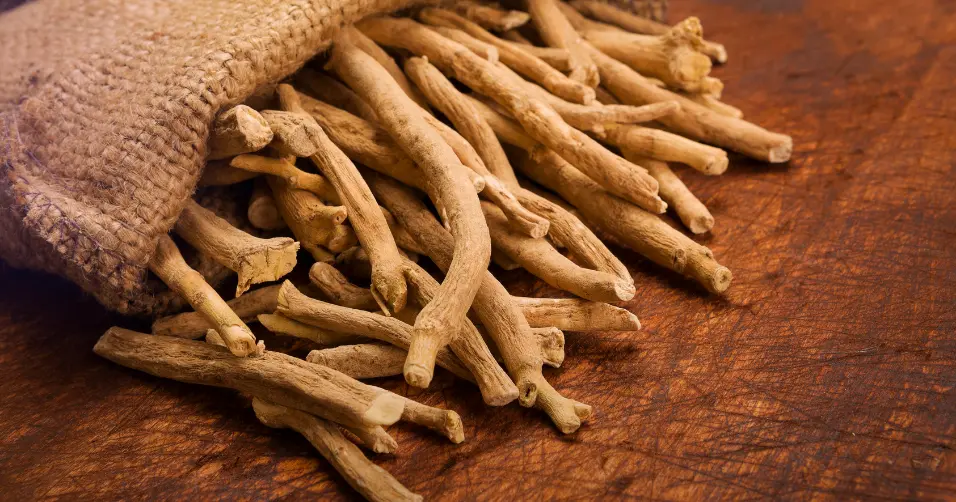
Ashwagandha is not naturally present in everyday foods. It comes from the root of a plant grown in dry regions of India and Africa. Traditionally, it is consumed as a powder or extract, not through diet. Herbal teas and blends sometimes include it. Its active compounds are concentrated in the root rather than leaves or fruits.

  • Ashwagandha roots are the natural source of its key compounds.

  • It does not appear in fruits, vegetables, or grains.

  • Powders and extracts are the traditional dietary entry points.

  • Teas may carry mild amounts of ashwagandha when blended with herbs.

Ashwagandha is not naturally present in everyday foods. It comes from the root of a plant grown in dry regions of India and Africa. Traditionally, it is consumed as a powder or extract, not through diet. Herbal teas and blends sometimes include it. Its active compounds are concentrated in the root rather than leaves or fruits.

  • Ashwagandha roots are the natural source of its key compounds.

  • It does not appear in fruits, vegetables, or grains.

  • Powders and extracts are the traditional dietary entry points.

  • Teas may carry mild amounts of ashwagandha when blended with herbs.

Is Ashwagandha Vegan?

Ashwagandha is vegan as it is a root extract.

Ashwagandha is vegan because it is a root-based herbal product. Powders and extracts are entirely plant-derived. Capsules may occasionally contain gelatin, which is not vegan. Vegan-certified capsules or powders remove this concern. Its traditional use in plant-based systems of medicine makes it suitable for vegans.

  • Ashwagandha root is completely plant-based and vegan-friendly.

  • Capsule shells may require checking for gelatin content.

  • Powder forms are always vegan since they contain only the herb.

  • Vegan labeling ensures capsule integrity for plant-based users.

Ashwagandha is vegan because it is a root-based herbal product. Powders and extracts are entirely plant-derived. Capsules may occasionally contain gelatin, which is not vegan. Vegan-certified capsules or powders remove this concern. Its traditional use in plant-based systems of medicine makes it suitable for vegans.

  • Ashwagandha root is completely plant-based and vegan-friendly.

  • Capsule shells may require checking for gelatin content.

  • Powder forms are always vegan since they contain only the herb.

  • Vegan labeling ensures capsule integrity for plant-based users.

Will Ashwagandha Break a Fast?

Ashwagandha may contain trace calories, so it could break a strict fast.

Ashwagandha root powder and extracts contain plant matter with calories, so they break a fast. Capsules with only dried herb also technically interrupt fasting. For metabolic fasting goals, small amounts may still be acceptable. The herb is often taken with meals for better digestion and absorption. It is best reserved for eating windows in strict fasting protocols.

  • Ashwagandha contains calories, ending a water-only fast.

  • Capsules and powders have small amounts of energy from plant matter.

  • Some intermittent fasting methods may allow small-calorie supplements.

  • Best effects occur when taken with meals, supporting absorption.

Ashwagandha root powder and extracts contain plant matter with calories, so they break a fast. Capsules with only dried herb also technically interrupt fasting. For metabolic fasting goals, small amounts may still be acceptable. The herb is often taken with meals for better digestion and absorption. It is best reserved for eating windows in strict fasting protocols.

  • Ashwagandha contains calories, ending a water-only fast.

  • Capsules and powders have small amounts of energy from plant matter.

  • Some intermittent fasting methods may allow small-calorie supplements.

  • Best effects occur when taken with meals, supporting absorption.

Breaking a fast here is strictly physiological (e.g., insulin effects). When we say a supplement ‘does not break a fast,’ we mean it has negligible calories in normal use and is unlikely to disrupt fasting metabolism. Certain traditions or religious rules may treat any intake as breaking a fast—please follow your tradition and health needs.

Breaking a fast here is strictly physiological (e.g., insulin effects). When we say a supplement ‘does not break a fast,’ we mean it has negligible calories in normal use and is unlikely to disrupt fasting metabolism. Certain traditions or religious rules may treat any intake as breaking a fast—please follow your tradition and health needs.

How to Pick the Best Ashwagandha?

Ashwagandha should be picked standardized for withanolides and tested for contaminants.

High-quality ashwagandha products should be standardized for withanolide content. Root-only extracts are preferred over mixed leaf products for traditional and effective use. Capsules should avoid fillers and artificial additives. Third-party lab tests confirm potency and purity. Ethical sourcing ensures sustainable and clean cultivation practices.

  • Standardization guarantees consistent withanolide levels across batches.

  • Root extracts align with traditional use and proven benefits.

  • Minimal fillers keep the product pure and easier to digest.

  • Verified lab tests protect against contamination and mislabeling.

High-quality ashwagandha products should be standardized for withanolide content. Root-only extracts are preferred over mixed leaf products for traditional and effective use. Capsules should avoid fillers and artificial additives. Third-party lab tests confirm potency and purity. Ethical sourcing ensures sustainable and clean cultivation practices.

  • Standardization guarantees consistent withanolide levels across batches.

  • Root extracts align with traditional use and proven benefits.

  • Minimal fillers keep the product pure and easier to digest.

  • Verified lab tests protect against contamination and mislabeling.

What’s the Optimal Dosage and Timing for Ashwagandha?

Ashwagandha is commonly taken at 300–600 mg daily, often in two doses.

The optimal ashwagandha dosage is typically 300 to 600 mg of standardized extract daily. It is best taken in two divided doses with meals. Some people prefer taking it in the evening to support relaxation and sleep. Traditional powders may require higher amounts than concentrated extracts. Consistency over weeks is needed to see full benefits.

  • 300–600 mg daily is effective for stress and energy balance.

  • Dividing doses improves tolerance and steady effects.

  • Evening intake may support better sleep and calmness.

  • Powder forms need larger amounts compared to extracts.

The optimal ashwagandha dosage is typically 300 to 600 mg of standardized extract daily. It is best taken in two divided doses with meals. Some people prefer taking it in the evening to support relaxation and sleep. Traditional powders may require higher amounts than concentrated extracts. Consistency over weeks is needed to see full benefits.

  • 300–600 mg daily is effective for stress and energy balance.

  • Dividing doses improves tolerance and steady effects.

  • Evening intake may support better sleep and calmness.

  • Powder forms need larger amounts compared to extracts.

Dosage and timing information is generalized and may not be appropriate for all individuals; occasional inaccuracies may occur. Variations in supplement purity, formulation, or quality can also affect dosing relevance. Verify accuracy on package and consult a qualified practitioner before use.

Dosage and timing information is generalized and may not be appropriate for all individuals; occasional inaccuracies may occur. Variations in supplement purity, formulation, or quality can also affect dosing relevance. Verify accuracy on package and consult a qualified practitioner before use.

What Are Common Mistakes When Taking Ashwagandha?

Ashwagandha mistakes include high doses that may cause stomach upset or drowsiness.

Ashwagandha mistakes include taking too much too quickly, leading to stomach upset. Some people stop use too soon, not giving time for benefits to appear. Using non-standardized extracts may result in inconsistent effects. Taking it only occasionally reduces adaptogen benefits. Pairing it with stimulants may counteract its calming effect.

  • High initial doses may trigger digestive side effects.

  • Benefits often require weeks of consistent use, not just days.

  • Non-standardized forms lack reliable levels of active compounds.

  • Mixing with stimulants reduces its stress-relief effectiveness.

Ashwagandha mistakes include taking too much too quickly, leading to stomach upset. Some people stop use too soon, not giving time for benefits to appear. Using non-standardized extracts may result in inconsistent effects. Taking it only occasionally reduces adaptogen benefits. Pairing it with stimulants may counteract its calming effect.

  • High initial doses may trigger digestive side effects.

  • Benefits often require weeks of consistent use, not just days.

  • Non-standardized forms lack reliable levels of active compounds.

  • Mixing with stimulants reduces its stress-relief effectiveness.

How Fast Does Ashwagandha Work?

Ashwagandha effects on stress and energy appear in weeks.

Ashwagandha may produce calming effects within days for some people. Stress reduction and improved sleep often appear after two to four weeks. Physical performance and energy gains build more slowly over time. Hormonal balance benefits may take several months. Consistency is needed for full adaptogen effects.

  • Relaxation and calmness can be felt within the first week.

  • Better sleep quality often emerges after weeks of use.

  • Energy and recovery benefits require longer-term intake.

  • Hormone-related effects develop slowly, over months of steady use.

Ashwagandha may produce calming effects within days for some people. Stress reduction and improved sleep often appear after two to four weeks. Physical performance and energy gains build more slowly over time. Hormonal balance benefits may take several months. Consistency is needed for full adaptogen effects.

  • Relaxation and calmness can be felt within the first week.

  • Better sleep quality often emerges after weeks of use.

  • Energy and recovery benefits require longer-term intake.

  • Hormone-related effects develop slowly, over months of steady use.

Results may vary between individuals, and no outcome is guaranteed. A tailored supplemntation plan is the best way to ensure the desired outcome.

Results may vary between individuals, and no outcome is guaranteed. A tailored supplemntation plan is the best way to ensure the desired outcome.

Does Ashwagandha Require a Cooldown?

Ashwagandha may require cooldown after 2–3 months to maintain sensitivity.

Ashwagandha may benefit from occasional cooldowns. Long-term safety is generally good, but research is limited beyond several months. Cycling after 8–12 weeks allows the body to reset and prevents adaptation. Short breaks also reduce the chance of reduced effectiveness. Continuous high dosing without breaks may strain digestion or hormones.

  • Adaptogens like ashwagandha work best with occasional cycling.

  • Most studies last 2–3 months, so breaks add safety margins.

  • Cooldowns prevent tolerance and maintain benefits over time.

  • Short pauses protect against digestive or hormonal strain.

Ashwagandha may benefit from occasional cooldowns. Long-term safety is generally good, but research is limited beyond several months. Cycling after 8–12 weeks allows the body to reset and prevents adaptation. Short breaks also reduce the chance of reduced effectiveness. Continuous high dosing without breaks may strain digestion or hormones.

  • Adaptogens like ashwagandha work best with occasional cycling.

  • Most studies last 2–3 months, so breaks add safety margins.

  • Cooldowns prevent tolerance and maintain benefits over time.

  • Short pauses protect against digestive or hormonal strain.

The need to pause or cycle depends on individual factors such as goals, tolerance, and clinical context. No universal rule applies, and specialist review is recommended before making adjustments.

The need to pause or cycle depends on individual factors such as goals, tolerance, and clinical context. No universal rule applies, and specialist review is recommended before making adjustments.

Does Tolerance Develop for Ashwagandha?

Ashwagandha may lose effect if used continuously without breaks.

Ashwagandha may show some adaptation if taken continuously without breaks. Effects on stress and energy can feel less noticeable after months. Cycling helps sustain its benefits and prevent reduced impact. Some people experience consistent results, but research supports cautious cycling. Overall, tolerance is possible but not guaranteed.

  • Stress relief effects may fade with continuous high-dose use.

  • Cycling restores responsiveness and maintains benefits.

  • Some users experience stable results, showing variation.

  • Adaptogen cycling is a traditional practice to avoid tolerance.

Ashwagandha may show some adaptation if taken continuously without breaks. Effects on stress and energy can feel less noticeable after months. Cycling helps sustain its benefits and prevent reduced impact. Some people experience consistent results, but research supports cautious cycling. Overall, tolerance is possible but not guaranteed.

  • Stress relief effects may fade with continuous high-dose use.

  • Cycling restores responsiveness and maintains benefits.

  • Some users experience stable results, showing variation.

  • Adaptogen cycling is a traditional practice to avoid tolerance.

Information on tolerance is generalized and may not reflect individual differences in metabolism, duration of use, or health status. Reactions can vary, and any adjustment should follow qualified practicioner's recommendations.

Information on tolerance is generalized and may not reflect individual differences in metabolism, duration of use, or health status. Reactions can vary, and any adjustment should follow qualified practicioner's recommendations.

Can Ashwagandha Be Stacked?

Ashwagandha can be stacked with rhodiola or shilajit for stress and energy support.

Ashwagandha stacks well with magnesium for relaxation and sleep support. It can also be combined with rhodiola for balanced energy and stress resilience. Athletes may pair it with protein or creatine for recovery and strength. Stacking should avoid too many adaptogens at once, which can blur effects. Simple combinations work best for long-term use.

  • Ashwagandha with magnesium promotes calmness and better sleep.

  • Rhodiola complements ashwagandha by boosting energy without overstimulation.

  • Protein and ashwagandha aid muscle repair and recovery for athletes.

  • Too many adaptogens may cause unpredictable hormone effects.

Ashwagandha stacks well with magnesium for relaxation and sleep support. It can also be combined with rhodiola for balanced energy and stress resilience. Athletes may pair it with protein or creatine for recovery and strength. Stacking should avoid too many adaptogens at once, which can blur effects. Simple combinations work best for long-term use.

  • Ashwagandha with magnesium promotes calmness and better sleep.

  • Rhodiola complements ashwagandha by boosting energy without overstimulation.

  • Protein and ashwagandha aid muscle repair and recovery for athletes.

  • Too many adaptogens may cause unpredictable hormone effects.

Many supplements can interact in ways that enhance or alter their effects. However, stacking makes it difficult to monitor the impact of each component and increases the risk of oversupplementation or unintended interactions.

Many supplements can interact in ways that enhance or alter their effects. However, stacking makes it difficult to monitor the impact of each component and increases the risk of oversupplementation or unintended interactions.

Do Ashwagandha Effects Persist?

Ashwagandha effects fade within days to weeks after stopping.

Ashwagandha effects may persist for weeks after stopping due to hormonal balance. Stress relief and sleep improvements can last temporarily. Energy and endurance benefits fade more quickly. Long-term hormone effects decline if supplementation is discontinued. Regular cycling ensures ongoing adaptogen benefits.

  • Hormonal support lingers briefly after ending intake.

  • Calmness and sleep quality may stay improved for a short period.

  • Energy and recovery benefits fade faster without use.

  • Consistency or cycling maintains best long-term effects.

Ashwagandha effects may persist for weeks after stopping due to hormonal balance. Stress relief and sleep improvements can last temporarily. Energy and endurance benefits fade more quickly. Long-term hormone effects decline if supplementation is discontinued. Regular cycling ensures ongoing adaptogen benefits.

  • Hormonal support lingers briefly after ending intake.

  • Calmness and sleep quality may stay improved for a short period.

  • Energy and recovery benefits fade faster without use.

  • Consistency or cycling maintains best long-term effects.

Results may vary between individuals, and no outcome is guaranteed. A tailored supplemntation plan is the best way to ensure the desired outcome.

Results may vary between individuals, and no outcome is guaranteed. A tailored supplemntation plan is the best way to ensure the desired outcome.

Does Ashwagandha Aid Longevity?

Ashwagandha may aid longevity by lowering stress and balancing hormones.

Ashwagandha may support longevity through stress reduction and hormone balance. Lower cortisol over time reduces wear on the body’s systems. It also supports sleep, which is critical for long-term health. Its adaptogenic effects promote resilience to physical and mental challenges. Direct evidence for lifespan extension is not yet clear.

  • Reduced cortisol slows stress-related aging damage.

  • Improved sleep enhances long-term recovery and repair.

  • Adaptogen resilience maintains strength in aging adults.

  • Research on lifespan extension is still developing.

Ashwagandha may support longevity through stress reduction and hormone balance. Lower cortisol over time reduces wear on the body’s systems. It also supports sleep, which is critical for long-term health. Its adaptogenic effects promote resilience to physical and mental challenges. Direct evidence for lifespan extension is not yet clear.

  • Reduced cortisol slows stress-related aging damage.

  • Improved sleep enhances long-term recovery and repair.

  • Adaptogen resilience maintains strength in aging adults.

  • Research on lifespan extension is still developing.

What Are Alternatives to Ashwagandha?

Ashwagandha alternatives include rhodiola and ginseng as adaptogens.

Alternatives to ashwagandha include rhodiola, ginseng, and holy basil. These adaptogens provide stress relief and energy balance. Magnesium also calms the nervous system naturally. For sleep, valerian root offers a herbal alternative. Options depend on whether stress, energy, or sleep is the main goal.

  • Rhodiola supports energy and resilience against stress fatigue.

  • Ginseng improves stamina and mental clarity like ashwagandha.

  • Holy basil reduces stress hormones and supports calmness.

  • Valerian root aids sleep and relaxation as a substitute.

Alternatives to ashwagandha include rhodiola, ginseng, and holy basil. These adaptogens provide stress relief and energy balance. Magnesium also calms the nervous system naturally. For sleep, valerian root offers a herbal alternative. Options depend on whether stress, energy, or sleep is the main goal.

  • Rhodiola supports energy and resilience against stress fatigue.

  • Ginseng improves stamina and mental clarity like ashwagandha.

  • Holy basil reduces stress hormones and supports calmness.

  • Valerian root aids sleep and relaxation as a substitute.

There are often alternatives that better align with personal risk profiles, preferences, or resources; comparative review with a relevant certified consultant is advised.

There are often alternatives that better align with personal risk profiles, preferences, or resources; comparative review with a relevant certified consultant is advised.

What Are Possible Ashwagandha Side Effects?

Ashwagandha side effects may include stomach upset, drowsiness, or thyroid changes.

Ashwagandha side effects may include stomach upset, diarrhea, and drowsiness. Some users experience increased thyroid activity. High doses may cause nausea or vomiting. Rare allergic reactions include skin rashes. Long-term excessive intake can affect hormone balance.

  • Digestive upset is common at higher doses.

  • Thyroid hormone levels may increase with prolonged use.

  • Drowsiness can occur when combined with sedatives.

  • Allergic reactions, though rare, may involve skin irritation.

Ashwagandha side effects may include stomach upset, diarrhea, and drowsiness. Some users experience increased thyroid activity. High doses may cause nausea or vomiting. Rare allergic reactions include skin rashes. Long-term excessive intake can affect hormone balance.

  • Digestive upset is common at higher doses.

  • Thyroid hormone levels may increase with prolonged use.

  • Drowsiness can occur when combined with sedatives.

  • Allergic reactions, though rare, may involve skin irritation.

Responses differ among individuals. If adverse effects occur, discontinuation and professional evaluation are advised.

Responses differ among individuals. If adverse effects occur, discontinuation and professional evaluation are advised.

Who Should Avoid Ashwagandha?

Ashwagandha should be avoided by people with thyroid disorders or autoimmune disease.

Ashwagandha should be avoided by people with hyperthyroidism since it may increase thyroid activity. Pregnant women should not take it due to risks of miscarriage. Autoimmune patients may find it overstimulates the immune system. People with digestive sensitivity may experience discomfort at high doses. Medical advice is recommended for those with chronic conditions.

  • Hyperthyroid patients risk hormone overstimulation from ashwagandha.

  • Pregnancy carries risk of miscarriage with ashwagandha use.

  • Autoimmune flare-ups may occur with its immune effects.

  • Stomach upset may worsen in sensitive individuals.

Ashwagandha should be avoided by people with hyperthyroidism since it may increase thyroid activity. Pregnant women should not take it due to risks of miscarriage. Autoimmune patients may find it overstimulates the immune system. People with digestive sensitivity may experience discomfort at high doses. Medical advice is recommended for those with chronic conditions.

  • Hyperthyroid patients risk hormone overstimulation from ashwagandha.

  • Pregnancy carries risk of miscarriage with ashwagandha use.

  • Autoimmune flare-ups may occur with its immune effects.

  • Stomach upset may worsen in sensitive individuals.

Individuals who may be at higher risk—including those with diabetes, eating disorders, pregnancy or breastfeeding, heavy training loads, health conditions, medication use, or prior adverse reactions—should seek tailored guidance before deciding supplementation or making major supplement or lifestyle changes.

Individuals who may be at higher risk—including those with diabetes, eating disorders, pregnancy or breastfeeding, heavy training loads, health conditions, medication use, or prior adverse reactions—should seek tailored guidance before deciding supplementation or making major supplement or lifestyle changes.

Is Ashwagandha Available Over-the-Counter?

Ashwagandha is available over-the-counter in standardized herbal extracts.

Ashwagandha is sold over-the-counter as a herbal supplement. Forms include capsules, powders, and tinctures. No prescription is needed, as it is classified as an adaptogen. Some regions regulate labeling but not access. It is commonly found in wellness shops and online.

  • Capsules and powders are the most popular OTC ashwagandha forms.

  • No prescription is needed for adaptogen use.

  • Labeling regulations ensure product consistency in some countries.

  • Easy to buy in physical and online health stores.

Ashwagandha is sold over-the-counter as a herbal supplement. Forms include capsules, powders, and tinctures. No prescription is needed, as it is classified as an adaptogen. Some regions regulate labeling but not access. It is commonly found in wellness shops and online.

  • Capsules and powders are the most popular OTC ashwagandha forms.

  • No prescription is needed for adaptogen use.

  • Labeling regulations ensure product consistency in some countries.

  • Easy to buy in physical and online health stores.

For over-the-counter availability we use generic US data. Product availability and status may vary by country and region.

For over-the-counter availability we use generic US data. Product availability and status may vary by country and region.

What’s the History of Ashwagandha?

Ashwagandha has been used in Ayurvedic medicine for over 3000 years.

Ashwagandha has been used in Ayurvedic medicine for over 3,000 years. It was known as a “rejuvenating” herb for strength, stress, and vitality. Traditional healers prescribed it for sleep, fertility, and resilience. Modern science began validating its adaptogenic effects in the 20th century. Today it is among the most researched and used adaptogens worldwide.

  • Ayurveda texts described ashwagandha as a longevity and vitality herb.

  • It was prescribed for stress resistance and reproductive health.

  • 20th-century science confirmed cortisol-lowering and adaptogen effects.

  • Modern use spreads globally as a stress-relief and balance supplement.

Ashwagandha has been used in Ayurvedic medicine for over 3,000 years. It was known as a “rejuvenating” herb for strength, stress, and vitality. Traditional healers prescribed it for sleep, fertility, and resilience. Modern science began validating its adaptogenic effects in the 20th century. Today it is among the most researched and used adaptogens worldwide.

  • Ayurveda texts described ashwagandha as a longevity and vitality herb.

  • It was prescribed for stress resistance and reproductive health.

  • 20th-century science confirmed cortisol-lowering and adaptogen effects.

  • Modern use spreads globally as a stress-relief and balance supplement.

How Does MOTS-C Relate to GDF-11?

MOTS-C is a mitochondrial peptide linked to metabolism that may interact with GDF-11 in tissue regeneration studies.

MOTS-C and GDF-11 appear together mostly in aging research discussing mitochondrial and tissue-regeneration pathways. MOTS-C is a small mitochondrial peptide linked with energy regulation. GDF-11 is a growth factor studied for potential roles in tissue remodeling. Their research fields sometimes overlap when examining systemic aging signals. They are not known to directly regulate one another.

  • Different origins: MOTS-C comes from mitochondria; GDF-11 is a growth factor.

  • Energy vs. remodeling: MOTS-C ties to metabolism; GDF-11 ties to structural renewal.

  • Aging interest: Both appear in studies on age-related signaling.

  • No firm link: Research has not shown direct functional interaction.


MOTS-C and GDF-11 appear together mostly in aging research discussing mitochondrial and tissue-regeneration pathways. MOTS-C is a small mitochondrial peptide linked with energy regulation. GDF-11 is a growth factor studied for potential roles in tissue remodeling. Their research fields sometimes overlap when examining systemic aging signals. They are not known to directly regulate one another.

  • Different origins: MOTS-C comes from mitochondria; GDF-11 is a growth factor.

  • Energy vs. remodeling: MOTS-C ties to metabolism; GDF-11 ties to structural renewal.

  • Aging interest: Both appear in studies on age-related signaling.

  • No firm link: Research has not shown direct functional interaction.


Does Ghrelin Raise GH?

Ghrelin increases GH by binding to its receptor in the hypothalamus and pituitary regions.

Ghrelin can raise GH by stimulating receptors that amplify GH-releasing signals. This effect is well documented in short-term studies. GH increases usually appear when ghrelin peaks before meals. The response also depends on age and body composition. Stress and sleep can change the pattern.

  • Direct stimulation: Ghrelin boosts GH-release pathways.

  • Pre-meal rise: GH increases often follow ghrelin surges.

  • Age factors: Younger individuals show stronger responses.

  • Lifestyle influence: Sleep and stress alter ghrelin rhythms.


Ghrelin can raise GH by stimulating receptors that amplify GH-releasing signals. This effect is well documented in short-term studies. GH increases usually appear when ghrelin peaks before meals. The response also depends on age and body composition. Stress and sleep can change the pattern.

  • Direct stimulation: Ghrelin boosts GH-release pathways.

  • Pre-meal rise: GH increases often follow ghrelin surges.

  • Age factors: Younger individuals show stronger responses.

  • Lifestyle influence: Sleep and stress alter ghrelin rhythms.


How Does Ashwagandha Compare to Rhodiola?

Ashwagandha compares to Rhodiola as both are adaptogens, but ashwagandha reduces anxiety while Rhodiola boosts endurance.

Ashwagandha and rhodiola differ in how they influence stress and energy. Ashwagandha leans toward calming effects linked to stress reduction. Rhodiola leans toward alertness support during demanding tasks. Both are considered adaptogenic herbs. Their differences show up in how people feel during use.

  • Calming vs energizing is the main contrast. Ashwagandha tends to relax while rhodiola lifts energy.

  • Stress pathways differ in emphasis. Each herb influences different stress-response proteins.

  • Performance effects show different patterns. Rhodiola suits high-demand tasks while ashwagandha suits unwinding.

  • Daily timing often shifts because of these contrasts. Rhodiola fits daytime and ashwagandha fits evenings.

Ashwagandha and rhodiola differ in how they influence stress and energy. Ashwagandha leans toward calming effects linked to stress reduction. Rhodiola leans toward alertness support during demanding tasks. Both are considered adaptogenic herbs. Their differences show up in how people feel during use.

  • Calming vs energizing is the main contrast. Ashwagandha tends to relax while rhodiola lifts energy.

  • Stress pathways differ in emphasis. Each herb influences different stress-response proteins.

  • Performance effects show different patterns. Rhodiola suits high-demand tasks while ashwagandha suits unwinding.

  • Daily timing often shifts because of these contrasts. Rhodiola fits daytime and ashwagandha fits evenings.

Medical Disclaimer: All content on this website is intended solely for informational and educational purposes and should not be interpreted as a substitute for professional medical advice, diagnosis, or treatment, nor as encouragement or promotion for or against any particular use, product, or activity. Results may vary and are not guaranteed. No doctor–patient relationship is created by your use of this content. Always consult a qualified healthcare provider, nutritionist, or other relevant expert before starting or changing any supplement, diet, exercise, or lifestyle program. This website can contain errors. Check important information. Read our full Disclaimer.

StatusTerms of ServicePrivacy PolicyDisclaimerAbout Myopedia.

©2025 Myopedia™. All rights reserved.

Medical Disclaimer: All content on this website is intended solely for informational and educational purposes and should not be interpreted as a substitute for professional medical advice, diagnosis, or treatment, nor as encouragement or promotion for or against any particular use, product, or activity. Results may vary and are not guaranteed. No doctor–patient relationship is created by your use of this content. Always consult a qualified healthcare provider, nutritionist, or other relevant expert before starting or changing any supplement, diet, exercise, or lifestyle program. This website can contain errors. Check important information. Read our full Disclaimer.

StatusTerms of ServicePrivacy PolicyDisclaimerAbout Myopedia.

©2025 Myopedia™. All rights reserved.

Medical Disclaimer: All content on this website is intended solely for informational and educational purposes and should not be interpreted as a substitute for professional medical advice, diagnosis, or treatment, nor as encouragement or promotion for or against any particular use, product, or activity. Results may vary and are not guaranteed. No doctor–patient relationship is created by your use of this content. Always consult a qualified healthcare provider, nutritionist, or other relevant expert before starting or changing any supplement, diet, exercise, or lifestyle program. This website can contain errors. Check important information. Read our full Disclaimer.

StatusTerms of ServicePrivacy PolicyDisclaimerAbout Myopedia.

©2025 Myopedia™. All rights reserved.